Team
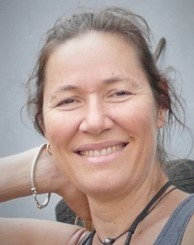


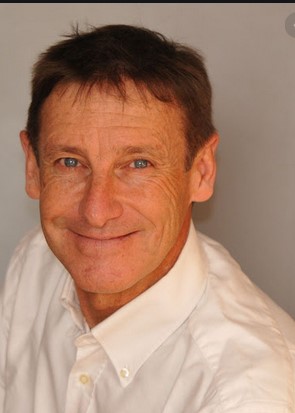
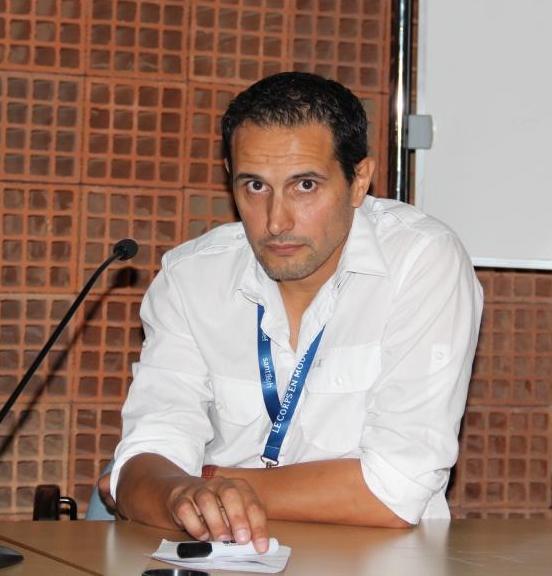
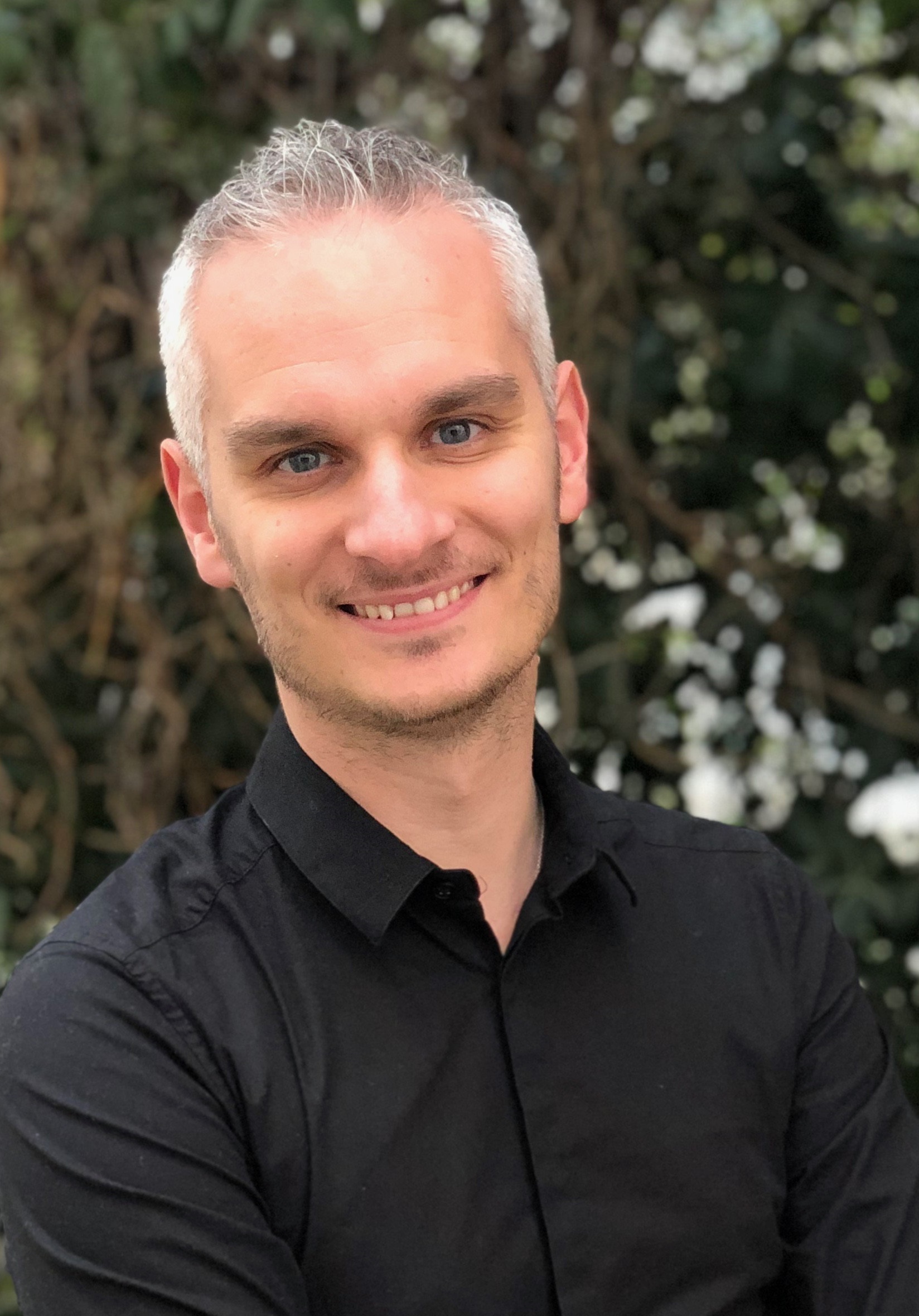
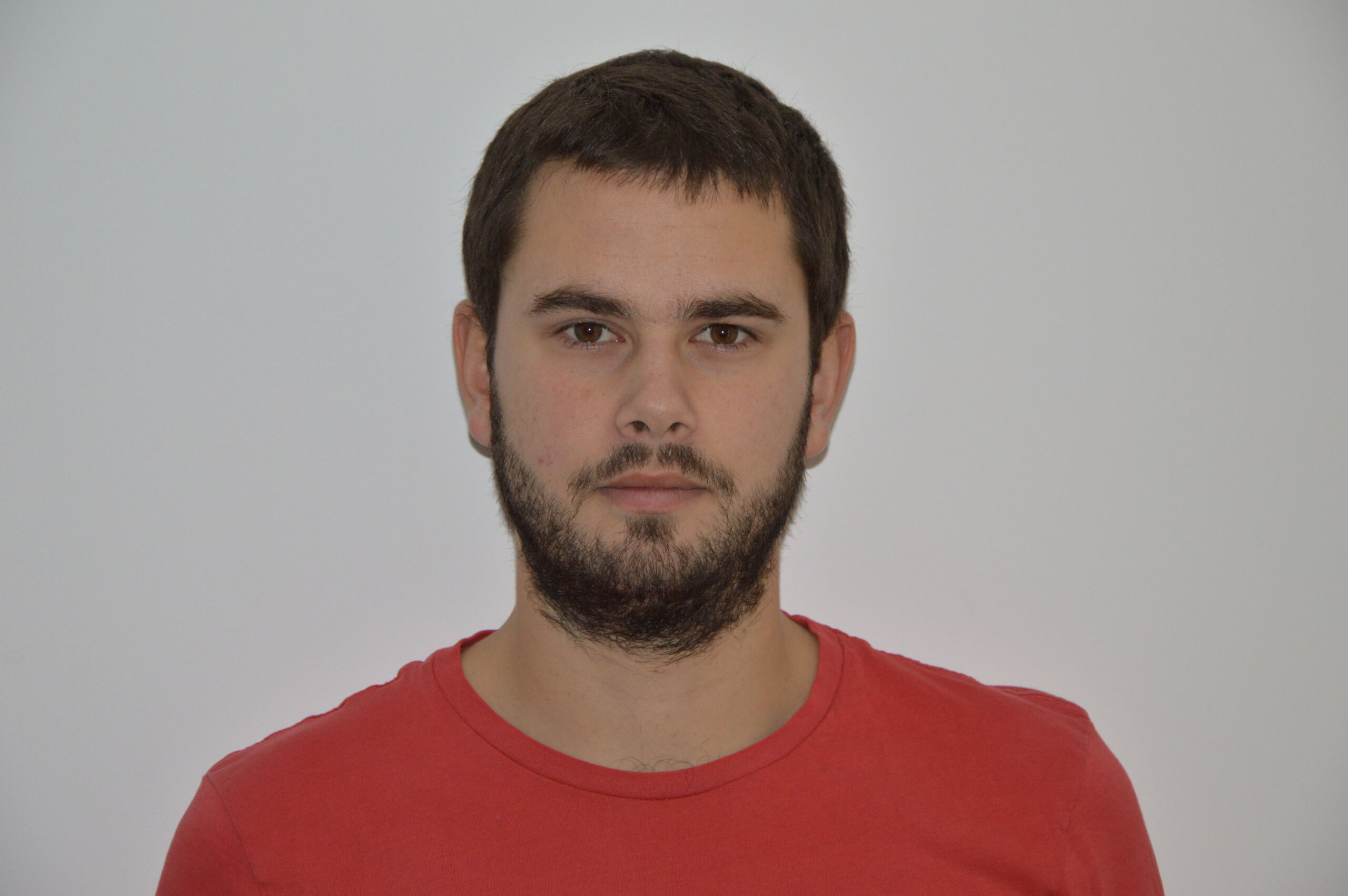
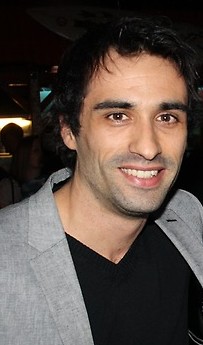
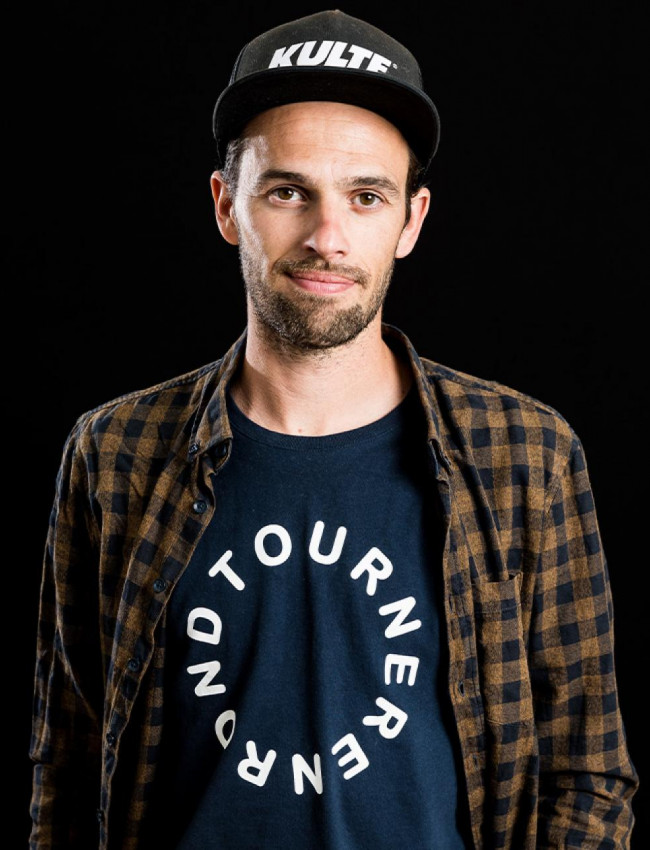

Anne Marcellini – Professor (on secondment)
Status: Professor
Specialization: Sociology of Sports and Adapted Physical Activities, Sociology of Disability
Email: anne.marcellini@umontpellier.fretanne.marcellini@unil.ch
Roles and Responsibilities:
Professor at Santesih
Currently on secondment to the Faculty of Social and Political Sciences at the University of Lausanne, Switzerland:
http://www.unil.ch/actu/fr/home/menuguid/nouveaux-professeurs/nouveaux-professeurs-2014/marcellini-anne.html
Research Topics:
- Depictions of the Impaired Body in Images and Social Representations of People with Disabilities
- Integration Through Sports and the Process of Destigmatization
- Changes in Concepts and Classifications of Disability
- Visual Approaches in the Social Sciences
Keywords:
Body, Sports, Images, Social Representations, Social Integration, Classification, Social Environments
Major productions:
- GAZZAC., LE ROUX N., MARCELLINI A. (forthcoming). Social Participation at the Association des Paralysés de France: Occupational Participation or Participation in Decision-Making?Revue ALTER, European Journal of Disability Research.
- MARCELLINI, A. (2020). An Epistemological Commentary on an Interdisciplinary Approach to the Amputated Body with a Prosthesis,Revue ALTER, European Journal of Disability Research, 14, 48–52.
- MARCELLINI, A. (2019). “Production, Reproduction, and Deconstruction of Disability and Normality in Late Modernity,” in Tabin, J.P., Piecek, M., Perrin, C., and Probst, I. (eds.), *Rethinking Normality: Critical Perspectives on Disability*,Editions Le Bord de l’eau.
- MARCELLINI, A., VIDAL, M., FEREZ, S., DE LESELEUC, E. (2019). “The Fastest Thing Without Legs,” in Andrieu, B. (ed.) (2019).Ethics of Sport: Sports Morality, Performance, and Agency. Paris: Vrin.
- BANCEL, N., CORNATON, J., MARCELLINI, A. (eds.) (2019).*Being Disabled, Becoming a Champion*, Routledge, ISBN: 978-0-367-18653-.
- BANCEL, N., CORNATON, J., MARCELLINI, A. (eds.) (2018). “Be disabled, becoming champion,” Special issue,*Sport in Society.Cultures, Commerce, Media, Politics*, 21, 4. ISSN1743-0437 (print) & 1743-0445 (online).
- MARCELLINI, A., & PACCAUD, L. (Eds.) (2018). Seventh Alter Conference, Lausanne, 2017. Disability, Recognition, and “Community Living”: Diversity of Practices and Plurality of Values,*Revue Alter*, European Journal of Disability Research, special issue, 2, 2018.
- MARCELLINI, A. (2018). “See you later, Good morning, Good evening…” Young athletes with intellectual disabilities share their perspectives on social integration, in Sebag, J., Durand, J.P., Louveau, C., Queirolo Palma, L., & Stgi, L. (eds.),Visual and Film Sociology. Perspectives on Everyday Life, GenovaUniversity Press, Ebook, ISBN: 978-88-97752-97-4, pp. 217–225.
- LANTZ, E., & MARCELLINI, A. (2018). Sport games for people with intellectual disabilities. Institutional analysis of an unusual international configuration,*Sport in Society*, 21, 4,April2018, pp. 635–648.
- BANCEL, N., CORNATON, J., MARCELLINI, A. (2018). From the Making of Paralympic Champions to the Justification of Biotechnological Enhancement of Humans: The Ideology of Progress in Action.*Sport in Society*,21, 4, April 2018, pp. 587–590.
- MARCELLINI, A. (2018). Extraordinary developments in disability sports. What does all this mean?Revue ALTER, European Journal of Disability Research, 2.
- MARCELLINI, A., & PACCAUD, L. (2018). Editorial: Special Issue—Seventh Alter Conference, Lausanne, 2017. Disability, Recognition, and “Community Living”: Diversity of Practices and Plurality of Values.Revue ALTER, European Journal of Disability Research, 2.
- LANTZ, E., & MARCELLINI, A. (Eds.) (2017). Sports Practices and Disability: From the Transformation to the Staging of Different Bodies, Special Issue –Revue Développement humain, handicap et changement social – Journal of Human Development, Disability, and Social Change, Quebec City, DS . RIPPH.ISSN1499-5549.
- MARCELLINI, A. (2017). Disability in Higher Education: Institutionalization, Dilemmas, and Challenges. Toward a Franco-Quebec Research Initiative. Reflections on Efforts to Recognize New Student Populations and So-Called “Invisible” Disabilities,NRAS,77, pp. 131–138.
- MARCELLINI, A. (2013) “Bionic Disabled People” in the U.S., in Andrieu, B. (ed.), *Corps au monde*,Paris: Armand Colin, pp. 182–185.
- MARCELLINI, A., COURROUY-MICHEL, M.C., and NGO, M.A. (2013). The Split (1972–1977): The “FFOHP Years,” in Ruffié, S., & Ferez, S. (eds.), Body, Sport, Disabilities:The Institutionalization of the Handisport Movement, 1954–2008, Paris, Téraèdre, pp. 91–105.
- MARCELLINI, A., DE LESELEUC, E., LEBEL, E. (2013). Press Photographs of Athletes with Disabilities: From the Analysis of an “Image-Object” to Some Reflections on Its Reception, in J.F. Diana (Ed.),Sport et écritures, Coll. Série actes, DS. Question de communication, pp. 241–251.
- MARCELLINI, A. (2012). “French Perspectives on the Media and the Paralympics,” inO. Schantz and K. Gilbert (eds.),*Heroes or Zeros: The Media’s Portrayal of Paralympic Sport*, pp. 95–103.
- MARCELLINI, A. (2012). “On the Representation of the ‘Disabled’ Body in Propaganda and Artistic Images,” in Korf-Sausse, S. (ed.) (2012).Art and Disability,Paris: Erès, pp. 91–105.
- MARCELLINI, A., & CHOPINAUD, M. (2012). Eligibility and Categorization of Athletes with Intellectual Disabilities: Issues and Rationale for Inclusion in the Paralympic Games, in Compte, R., & Bui-Xuan, G. (Eds.),Adapted Sports, Disability, and Health, Montpellier: FFSA-AFRAPS, pp. 216–225.
- MARCELLINI, A., FEREZ, S., ISSANCHOU, D., DE LESELEUC, E., & MCNAMEE, M. (2012). Challenging human and sporting boundaries: the case of Oscar Pistorius,*Performance Enhancement & Health*, 1, 3–9.
- MIKULOVIC, J., MARCELLINI, A., et al. (2011). Prevalence of overweight among adolescents with intellectual disabilities. Differences in socio-educational context, physical activity, and dietary habits.*Appetite*, 56, 403–407.
- MARCELLINI, A., VIDAL, M., FEREZ, S., & DE LESELEUC, E. (2010). “The Fastest Thing Without Legs.” Oscar Pistorius or the Spectacle of Human Limits,Revue Politix, 23, 90, 139–165.
Course Topics:
- Sociology of Organizations in the Sports and Health Sector
- Images of the Disabled Body and Society
- Research Methodology
Sylvain Ferez – Associate Professor (MCU HDR)
 Field of Study: Sociology, Social History
Phone (business): 04 11 75 90 88
Email: sylvain.ferez(at)umontpellier.fr
Role and Mission:
Sylvain Ferez has been director of the SANTESIH laboratory since 2015 and associate director of the “Education” scientific department at the University of Montpellier since 2017. At SANTESIH, he has been leading two research programs for the past decade that focus on the socio-historical issues surrounding sports for people with disabilities and the impact of an HIV-positive diagnosis on access to physical and sports activities. As part of these programs, he also directs several comparative studies between mainland France and Guadeloupe.
Research Topics:
• Experiences with HIV, body image, and access to physical and sports activities for people living with HIV;
• Disability, health, and community and organizational advocacy;
• Gender, sexuality, and discrimination in physical and sports activities;
Keywords:
Physical and sports activities, health, disability, HIV, gender, sexuality.
Major productions:
– Construction Projects and Project Management:
• L. Solini, J. Yeghicheyan, S. Ferez (2019). Prisons: Uses and Appropriations of Carceral Spaces. Paris: Éditions de la Sorbonne, Locus Solus Series.
• S. Ferez (2016). The Critical Corporation: Physical Management and Sports Mobilization of Marginalized Groups. Paris: L’Harmattan, Mouvements des savoirs Series.
• S. Ferez & S. Ruffié (2015). The Body of Shame: A Social History of HIV/AIDS Care in Guadeloupe. Nancy: Presses Universitaires de Nancy, Epistémologie du corps Series.
• S. Ruffié & S. Ferez (2013). Body, Sport, Disabilities (1): The Institutionalization of the Disabled Sports Movement (1954–2008). Paris: Téraèdre, “Passage aux actes” series.
• S. Ferez & J. Thomas (2012). HIV & Sport: A Body Under Medical Constraint. Paris: Téraèdre, “Passage aux actes” series.
• S. Ferez (2008). The Homosexual Body at Stake: A Sociology of Gay and Lesbian Sports. Nancy: Presses Universitaires de Nancy, “Epistemology of the Body” series.
• S. Ferez (2007). The Destabilized Body: The Work of Claude Pujade-Renaud. Paris: L’Harmattan, “ The Body in Question.
• A., Elling & S. Ferez (2007). Fitness Centers as Transient Communities. Nieuwegein: Arko Sports Media.
• S. Ferez (2005). Lies and Truths of Bodies in Motion. The Work of Claude Pujade-Renaud. Paris: L’Harmattan, “Spaces and Times of Sport” series.
– Major articles published in recent years:
• S. Ferez, Y. Moralès, C. Erard (2019, in press). Naissance d’une approche critique du sport et du corps. Le rôle de Michel Bernard (1927-2015) dans le « moment 68 » de l’éducation physique. STAPS.
• R. Richard, A. Marcellini, A. S. Pappous, H. Joncheray, S. Ferez (2019). Construire et assurer l’héritage des Jeux olympiques et paralympiques. Pour une inclusion sportive durable des personnes vivant des situations de handicap. Movement & Sport Sciences/Science & Motricité, Published online : 27 Septembre 2019 [https://doi.org/10.1051/sm/2019031].
• Y. Moralès, Y. Travaillot, S. Ferez (2019). Le GREC (1968-1976), une contestation « par corps » de la formation des enseignants d’éducation physique et sportive. Sciences Sociales et Sport, 13, 57-84.
• A. Bergamaschi, F. D’Arripe-Longueville, L. Liora Gray, S. Colson, C. Goujard, S. Ferez, I. Rouanet, J. Durant, E. Rosenthal, C. Pradier, M. Duracinsky, L. Schuft (2019). Perceived HIV-related physical fatigue, sociodemographic characteristics and physical activity: a cross-sectional study. Journal of Clinical Nursing, 28(11-12), 2147-2156.
• L. Schuft, E. Duval, J. Thomas, S. Ferez (2018). « To be or not to be sick and tired ». Managing the visibility of HIV and HIV-related fatigue. Health: An Interdisciplinary Journal for the Social Study of Health, Illness and Medicine, 22(4), 317-336.
• S. Ferez, S. Ruffié, S. Héas (2018). Recognizing geographic and cultural alterity through sport? Institutionalizing the Arctic Games (1967-2004). Diagoras: International Academic Journal on Olympic Studies, 2, 11-34. [http://diagorasjournal.com/index.php/diagoras/article/view/5] • S. Ferez & E. Perera (2018). “To those who say that I am ill, I invite them to come and train with me.” Becoming a bodybuilder in the face of HIV. STAPS, 119, 95-116.
• S. Ferez, S. Ruffié, S. Héas (2018). Sports and « Minorities »: Negotiating the Olympic Model. Sport, Ethics and Philosophy, 12(2), 177-193.
• D. Issanchou, S. Ferez, E. de Léséleuc (2018). Technology at the service of natural performance: cross analysis of the Oscar Pistorius and Caster Semenya cases. Sport in Society, 21(4), 689-704.
• S. Ferez, S. Ruffié, D. Issanchou, J. Cornaton (2018). The manager, the doctor and the technician. Political recognition and institutionalization of sport for the physically disabled in France (1968-1973). Sport in Society, 21(4), 622–634.
• J. Cornaton, A. Schweizer, S. Ferez, N. Bancel (2018). The divisive origins of sports for physically disabled people in Switzerland (1956-1968). Sport in Society, 21(4), 591-609.
• M. Perez, S. Ferez, S. Héas (2017). L’infection au VIH à l’ère de la maladie chronique : Les avatars du retour des refoulés de la mort et de la sexualité. SociologieS. Mis en ligne le 13 novembre 2017 [http://sociologies.revues.org/6371].
• M. Perez & S. Ferez (2017). Sport et VIH-sida : de l’exclusion des séropositifs à l’accompagnement des « malades ». Sciences de la société, 101, 92-111.
• S. Ferez & L. Solini (2017). Sports et politiques publiques. De la réciproque des relations ?. Sciences Sociales et Sport, 10, 13-19.
• S. Ferez, S. Ruffié, N. Bancel (2016). From Sport as an instrument in Rehabilitation to the adoption of Competitive Sport: Genesis of a Delegatee Sports Federation in France for those with Physical Disabilities (1954-1972). Sport History Review, 47(2), 146-171.
• A. Marcellini, E. Perera, A. Rodhain, S. Ferez (2016). Rapport au corps et engagement dans les activités physiques chez les personnes touchées par l’obésité. Comment penser les « histoires de corps » individuelles dans une « société obésogène » ?. Santé Publique, HS(S1). 117-125.
• E. Duval, S. Ferez, J. Thomas, L. Schuft (2016). « Devenir » malade chronique par l’activité physique : le rôle des associations VIH. Santé Publique, HS(S1). 89-100.
• G. Villoing, S. Ruffié, S. Ferez, S. (2016). Care en milieu postcolonial : émancipation et revendication identitaire des personnes handicapées en Guadeloupe. ALTER, European Journal of Disability Research, 10, 54-66.
• S. Ferez, J. Thomas, S. Ruffié (2015). De l’auto-organisation des mutilés de guerre à la structuration d’une Fédération sportive pour handicapés physiques : la spécificité de la France (1954-1972). European Studies in Sports History, 8, 121-148.
• S. Ruffié, S. Ferez, E. Lantz (2014). From the Institutionalization of “all disabilities” to Comprehensive Sports Integration: The Enrolment of France in the Paralympic Movement (1954-2012). The International Journal of the History of Sport, 31(17), 2245-2265.
• S. Ferez, E. Duval, S. Héas, P. Fougeyrollas (2014). Continuer à s’engager dans des loisirs après avoir été infecté au VIH : entre quête de normalité et prescription sociale ?. Loisir & Société/Leisure and Society, 37(2), 205-223.
• S. Ruffié, S. Ferez, E. Lantz (2014). From the Institutionalization of “all disabilities” to Comprehensive Sports Integration: The Enrolment of France in the Paralympic Movement (1954-2012). The International Journal of the History of Sport, 31(17), 2245-2265.
• J. Thomas, E. Duval, S. Ferez (2014). La perception de l’activité physique comme mode de prise de charge du VIH : effets de la visibilité du corps sur les stratégies de gestion d’une maladie chronique. Movement & Sport Sciences/Science & Motricité, 84, 99-110.
• S. Ferez (2012). From Women’s Exclusion to Gender Institution: A Brief History of the Sexual Categorization Process within Sport. The International Journal of the History of Sport, vol. 29, n° 2, 272-285.
Course Topics:
• Sociology and History of Sport
• Sociology and Anthropology of Health and Disability
• Research Methods in the Social Sciences
Eric Perera – MCU HDR
Email:eric.perera@umontpellier.fr
Phone: 04 11 75 90 91
Role and Responsibilities:
- Head of the Sports Management Department
- Program Director, Master's in Sports Tourism Management
- Director of the University Extension Program in Mobility and Professional Development
- Teacher Training Program for Students with Disabilities (STAPS)
- Member of 3SLF (French-Language Society for the Sociology of Sport)
- Member of the Francophone Society for the Philosophy of Sport
- Treasurer, Corps et Culture Association
- President of Association Contact (Association of Doctoral Students and PhD Holders of the Montpellier Academy)
- Secretary of the Montpellier Workshop on Encounters and Comparative Research in Ethnology (ARCE)
Research topics:
Body, Sport, Disability.
My research falls within the field of social sciences. My work explores the body and its transformations and raises questions about what is acceptable: bodies halfway between human and machine, technicized bodies, or artificially augmented bodies.
Keywords:
Asceticism, control, bodily transformation, hyper-conformity, deviance.
Major publications:
Book:
- 2017, Perera, E., *Emprise de poids: An Introduction to Bodybuilding*, L’Harmattan, “Mouvement des Savoirs” series.
Collective work:
- 2020 Issanchou, D., & Perera, E., *Body, Sport, and Disabilities: Social Experiences and Experimentation with Technology* (Vol. 3), L’Harmattan, “Téraèdre” series, 208 pp. – Forewordby Frédéric Reichhart
- 2020 Beldame, Y., & Perera, E. *In Situ: Pushing the Boundaries of Field Research*. L’Harmattan, “Mouvement des Savoirs” series, 302 pp.—Forewordby Sylvain Ferez—Afterwordby Loïc Wacquant
- 2016, Perera, E., Beldame, Y. (eds.), *In Situ: Interactions, Situations, and Research Narratives*. L’Harmattan, “Mouvement des Savoirs” series, 302 pp.
Journal Issue Number
2018 Perera, E., & Gleyse, J. (eds.) Bodybuilding and the Body, STAPS Journal No. 119.
Articles:
- 2020 Perera, E., Villoing, G., and Galy, A. “The Inventiveness of Off-Road Wheelchair Mountaineers: The Use of Technology to Promote Independence and Highlight the ‘Disability-Capable’ Difference,” *Nature & Récréation*, pp. 41–51.https://www.naturerecreation.org/8-nat-et-recreation
- 2019 Perera, E., Villoing, G., and Ruffie, S. “Becoming a Handiski Instructor: Embracing Slowness to Ensure a Safe Handisport Skiing Experience at Ski Resorts,” *Nature & Récréation*, pp. 21–32.https://www.naturerecreation.org/7-nat-et-recreation
- 2019 Richard R., Perera E., and Le Roux N. “The Bodily Experience of Disabled Athletes: A Phenomenological Study of Powerchair Soccer,” *Sport in Society*https://doi.org/10.1080/17430437.2019.1609948
- 2019 Perera, E., & Villoing, G. “Adjusting to Disability in Nature Tourism: The Case of a Contemporary Experience with Expeditions Using All-Terrain Wheelchairs (ATW).” *Journal of Sport and Social Science*.
- 2018 Ferez, S., & Perera, E. “To those who say that I am ill, I invite them to come and train with me.” Becoming a bodybuilder in the face of HIV, STAPS journal no. 119, 95–119.
- 2018 Perera, E., & Gleyse, J. “Bodybuilding and the Transformation of the Body in Our Modern Societies,” STAPS, no. 119, pp. 7–11.
- 2017 Perera, E., Villoing, G., Ruffié, S., & Gosset, S., “The All-Terrain Wheelchair: A ‘Pair of Hiking Boots’—Bodily Experiences and Identity Reconfigurations,” *Science & Motricité*.https://doi.org/10.1051/sm/2017013
- 2017 Richard R. & Perera E., “Being a Powerchair Soccer Player: Towards a Phenomenological Approach to Disabled Sports,” *Sociology of Sport Journal*.
- 2017, Villoing, G., Perera, E., & Le Roux, N. The institutionalization of off-road wheelchair riding in France (1990–2015): “truly a sport of sharing and diversity.” Sport in Society, “Be Disabled, Becoming Champion,” 1–14 (Available here)
- 2016, Marcellini, A., Perera, E., Rodhain, A., Ferez, S., “Body Image and Engagement in Physical Activities Among People with Obesity,” Revue Santé Publique, 28/1.
Book chapters:
-
- 2020 Perera, E., & Beldame, Y. “Experiencing Relationships In Situ.”
“Entering into ‘Resonance’ with the Daily Lives of Bodybuilders.” In Andrieu, B. (ed.), *Manual of Emersiology: Learn the Language of the Body*, Paris, Paperback. - 2020 Perera, E., “Interview between Eric Perera and Patrick Ducros,” in Issanchou, D. & Perera, E. (eds.), *Body, Sport, and Disabilities: Social Experiences and Experimentation with Technology* (Vol. 3), L’Harmattan, “Téraèdre” series, pp. 183–199.
- 2020 Perera, E., Beldame, Y., and Soulé, B., “Accessibility of Ski Areas for People with Disabilities: Community Initiatives and Material Resources to Compensate for the Limited Commitment of Mountain Resort Managers,” in Issanchou, D., & Perera, E. (eds.), Body, Sport, and Disabilities. Social Experiences and Experimentation with Technology (Volume 3), L’harmattan, “Téraèdre” series, pp. 145–163.
- 2020 Issanchou, D., & Perera, E., “Reflecting on the Links Between Disability and Technology…” In Issanchou, D., & Perera, E. (eds.), *Body, Sport, and Disability: Social Experiences and Experimentation with Technology* (Vol. 3), L’Harmattan, “Téraèdre” series, pp. 15–29.
- 2019 Perera, E., & Beldame, Y. (in press) “The ‘I’ of Emotions in Situ: Falling While Skiing and Making the Social Order Visible.” In Stéphane Héas, Presses Universitaires de Rennes
- 2018 Richard A., & Perera E. (2018) “Emotion Researcher: An In Situ Experience in the Humanities and Social Sciences,” in Lima Neto A. A., Dantas da Silva, L. L., & Nascimento Santiago, M. B. (eds.), *Philosophy, Education, and Subjectivities: Other Meanings for Education*, Editora LiberArs, pp. 191–198.
- 2018 Cholley-Gomez, M., & Perera, E., “Bodybuilding,” in Andrieu, B., & Boëtsch, G. (eds.), *The Dictionary of the Body*, CNRS Editions, “Biblis” series, Paris, pp. 83–87.
- 2018 Richard R. and Perera E., “Wheelchair Soccer,” in Andrieu, B. and Boëtsch, G. (eds.), *The Dictionary of the Body*, CNRS Editions, “Biblis” series, Paris, pp. 226–229.
- 2018 Perera, E., & Cholley-Gomez, M., “No pain, no gain”: the Puritan ethic in bodybuilding. In Andrieu, B., Parry, J., Porrovecchio, A., & Sirost, O. (eds.), *Body Ecology and Immersive Leisure*, Ethics and Sport series,DS. Routledge, Great Britain, pp. 190–202.
- 2017 Perera, E. “Doping as Hyperconformity to Group Norms,” in Coste, O., Noger, K., Liotard, P., and Andrieu (eds.), *Doping: Understanding and Prevention*, Issy-les-Moulineaux: Elsevier Masson, Sport Collection, pp. 39–40.
- 2017 Cholley-Gomez, M., & Perera, E., “Bodybuilding and Doping: Meeting Group Standards,” in Coste, O., Noger, K., Liotard, P., and Andrieu (eds.), *Doping: Understanding and Prevention*, Issy-les-Moulineaux: Elsevier Masson, Sport Series, pp. 7–13.
- 2016 Beldame, Y., and Perera, E., “Investigating In Situ,” in *In Situ: Interactions, Situations, and Investigative Narratives*. L’Harmattan, “Mouvement des Savoirs” series, pp. 17–25.
- 2016 Beldame, Y., Perera, M., and Perera, E., “In Conversation with Rénato Rosaldo” (Afterword 1—translation), in *In Situ: Interactions, Situations, and Research Narratives*. L’Harmattan, “Mouvement des Savoirs” series, pp. 211–237.
- 2016, Richard, A., Perera, E., and Fauré, L. “Emotion Detector: An In Situ Experiment in the Social and Human Sciences,” in *Quel corps demain*, *Corps* No. 14, CNRS Editions
- 2020 Perera, E., & Beldame, Y. “Experiencing Relationships In Situ.”
Robin Recours – MCU HDR
Email:robin.recours(at)umontpellier.fr
Role and Mission:
Research Professor – Qualified to Supervise Research (HDR-Certified Associate Professor) in Sports Science, Humanities, and Social Sciences
Head of the First-Year Bachelor’s Program.
Research Topics:
- Popular Culture: Sports, Music, Video Games
- Adolescence
- Imaginary
Keywords:
Culture, Adolescence, Sports.
Major productions:
Articles:
- Lassalle, G., Recours, R., & Griffet, J. (in press). “The Role of Family Members in the Motivation, Involvement, and Expertise of Track and Field Athletes in France.” Journal of Comparative Family Studies.
- Riffaud, T., Recours, R., & Gibout, C. (2015). Street Sports and Arts: A Different Way of Being Urbanites. Loisir et Société / Society and Leisure, 39(1), 1–13.
- Recours, R., Aussaguel, F., & Trujillo, N. (2009). Metal Music and Mental Health in France. *Culture, Medicine and Psychiatry*, 33 (3), 473–488.
Book chapters:
- Recours, R. (2015). “Myopia and Presbyopia in the Sports Business,” in Lapeyronie & Roussel: Management & Regional Sports Marketing. Dardilly: Les Éditions de Bionnay, pp. 62–71.
- Recours, R. (2013). “You can fly. You belong to the sky.” “The Dream of Flight as Motivation in Winter Sports,” in Monneyron, F. (ed.): Sport and the Imagination. Montpellier: Presses Universitaires de la Méditerranée.
Course Topics:
- Anthropology of the Body and Sport
- Communication
Nathalie Le Roux – Assistant Professor
Major: Sports Science and Sociology
Phone (business): 04 11 75 90 96
Email: nathalie.le-roux(at)umontpellier.fr
Role and Mission:
- Deputy Director of SANTESIH
- Research Area Leader: The Social and Identity-Related Effects of Public Health Policies
- Academic Director of the Master's in Sports Tourism Services Management:http://management-tourisme-sport-sante.etud.univ-montp1.fr/
Research topic(s):
- Pathways to Employment and Careers, and, more recently, a study of the employment pathways of former students with disabilities
- Public Policies on Training and Employment for People with Disabilities
- Public Policy and Work, Leisure, Sports, and Tourism for People with Disabilities
Major productions:
Articles:
- SEGON, M., BRISSET, L., & LE ROUX, N. (2017), “Accommodations That Are Satisfactory but Insufficient? The Frustrating Experience of Disability Accommodations at the University.” *Nouvelle Revue de l’Adaptation et de la Scolarisation*, 77, 117–129.
- VILLOING, G., PERERA, E., & LE ROUX, N. (2017), “The institutionalization of off-road wheelchair riding in France (1990–2015): ‘truly a sport of sharing and diversity’.” *Sport in Society*, “Be disabled, becoming champion,” 1–14.
- SEGON, M., LE ROUX, N., (2015). Working Less to Work Longer: The (Limits of) Possibilities and Relationships to Professional Life Among Young People with Disabilities Who Have Completed Higher Education, Agora Débats/Jeunesses, No. 71,http://www.cairn.info/resume.php?ID_ARTICLE=AGORA_071_0111
- SEGON, M., LE ROUX, N., BANENS, M., CHAMPELY, S. (2014) “What statistical data can be used to measure the pathways of young students with disabilities into the workforce?” Revue française des affaires sociales 1/2014 (No. 1-2), pp. 216–237. http://www.cairn.info/resume.php?ID_ARTICLE=RFAS_141_0216
- SEGON, M., LE ROUX, N., (2013). Educational Pathways and Employment Outcomes for Former Students with Disabilities: Patterns of Use of Support Programs and Identity Dynamics, Agora Débats/Jeunesses, No. 65.http://www.cairn.info/resume.php?ID_ARTICLE=AGORA_065_0077
- DE LESELEUC, E., LE ROUX, N., and MARCELLINI, A. (2012), “Sports Participation, Visibility, and Social Integration of People with Disabilities,” ANDULI, 11, 71–85.
- LE ROUX, N., MARCELLINI, A., (2011), “The Labor Market Integration of Students with Disabilities in France: An Overview of Issues and Research Directions.” ALTER, 5, No. 4, 281–296.
- MELQUIOND, V., and LE ROUX, N. (2008), “The Diversification of Vocational Training Programs for Sports Professions: What Are the Social Partners’ Positions?”, European Journal of Sports Management, 21.
- BANENS, M., MARCELLINI, A., LE ROUX, N., FOURNIER, S., MENDES-LEITE, R., THIERS-VIDAL, L. (2007), “Access to Intimate Relationships for People Living with a Health Problem: A Demographic and Sociological Analysis,” *Revue française des Affaires Sociales*, 2, 57–82.
Book chapters:
- BRISSET, L., BLAHO-PONCE, C., LE ROUX, N. (forthcoming 2019), Implementing a Departmental Tourism Development Policy for People with Disabilities: The Case of Hérault Mobility. In Issanchou, D. and Perera, E. (eds.), Technological Innovations for Sports for People with Disabilities. Paris: Téraèdre
- LE ROUX, N., HAYE, L., PERERA, E., (2013), “Technological Innovations for Para-Skiing and Access to the Sport: Competitive Sport, Recreational Sport, Family Sport, and Sports Tourism,” in Marcellini, A., Villoing, G. (eds.), Body, Sport, Disabilities: The Para-Sports Movement in the 21st Century—Sociological Perspectives, Paris: Téraèdre.
- LE ROUX, N., COURROUY-MICHEL, M.C., DUVAL, E. (2013), “Implementing a National Model at the Local Level: The Example of the Montpellier Disabled Sports Club (1969–1985),” in Ruffié, S., Ferez, S. (eds.), Body, Sport, Disabilities: The Institutionalization of the Disabled Sports Movement (1954–2008), Paris: Téraèdre. pp. 117–131.
- LEROUX, N., HASCHAR-NOE, N., LE ROUX, N., and GOJARD, L. (2010) “Attitudes Toward Work and Employment Among Graduates of the STAPS Program,” in Léa Lima and Philippe Mossé (eds.), *Sport as a Career? STAPS: From Studies to Employment*, Octarès, 83–100.
- LE ROUX, N., AGUETTANT, N., (2006), “Employment in the Sports Sector in France and Its Trends: What Is the Current Situation, and How Can It Be Monitored Regularly Using Public Statistics?”, in Augustin, J.P. (ed.), The Career Transition to Jobs in Recreation and Sports, La Documentation Française, Paris. (pp. 147–165).
- LE ROUX, N. (2006), “Developments in Knowledge and Research Perspectives on Employment and Professionalization in the Sports Sector,” in (Bouchet, P., & Pigeassou, C., eds.), Sports Management: Current Issues, Development, and Research Directions, AFRAPS, Montpellier. (pp. 113–141).
Course Topics:
- Sociology of Organizations
- Human Resources Management
- Methodology of Applied Research
Rémi Richard – MCU
Email: remi.richard(at)umontpellier.fr
Role and Mission:
After defending his doctoral dissertation in 2013 on the experience of the body in sports for people with disabilities, Rémi Richard was hired in 2015 by the STAPS Department at the University of Montpellier. He is the program director for the PESAP Master’s 2 program in “Prevention, Health Education, and Physical Activity.”
Research Topics:
- Sociology of Disability
- Gender Sociology
- Disabilities and Technology
Major publications:
Book:
- Richard R. (2017). Being a Wheelchair Soccer Player: A Socio-Phenomenological Approach to the Body in Situations of Disability. L’Harmattan, Mouvements des Savoirs.
Articles:
- Richard R., Andrieu B. (2019) “The Cybathlon Experience: Beyond Transhumanism to Capability Hybridization.” *Journal for the Philosophy of Sport*. DOI: 10.1080/00948705.2018.1561297
- Richard R., Ferez S., Issanchou D. (2018) From the Pistorius Case to the Cybathlon: Compensating for Disability or Enhancing Human Capabilities? News in Physical Medicine and Rehabilitation.
- Richard R., André J. (2017). Cyborg and/or “handi-capable”? The experience of the “capacitary” body among Cybathlon participants. Research & Education, pp. 67–79.
- Dugas, E., Joncheray, H., and Richard, R. (2016). Violence, Aggressive Behavior, and Physical and Sports Activities: Comparative Perspectives. STAPS Journal, No. 112, pp. 9–15.
- Burlot, F., Richard, R., and Joncheray, H. (2016), “The Life of High-Level Athletes: The Challenge of High Performance Against Time Constraints,” *International Review for the Sociology of Sport*.
- Mordomo, E., Richard, R., and Maillot, P. (2015) “Accessibility: The Activists’ Perspective.” *Jurisasscoiations*, No. 528, pp. 43–35.
- Richard, R., Joncheray, H., Dugas, E. (2015) “Disabled female athletes and gender construction in powerchair soccer,” *International Review for the Sociology of Sport*.
- Joncheray, H., Level, M., Richard, R., (2014) “Identity Socialization and Construction within the French National Women’s Rugby Union Team,” *International Review for the Sociology of Sport*.
- Richard, R., Joncheray, H. (2014), “Well-being and Primary Health Care: A Bio-Psycho-Social Approach,” in EP&S No. 362, August–September–October.
- Richard, R. (2014) “Toward a New Form of Athletic ‘Capability’: The Emergence of Wheelchair Soccer,” *Jurisport* No. 140, pp. 28–29.
- Richard, R. (2012) “The Sporting Experience of the Body with a Disability: Toward a Phenomenology of the Wheelchair,” *Revue STAPS*, No. 98, pp. 127–142.
- Richard, R., Dugas, E. (2012), “Gender at Play: On the Construction of Gender in Table Tennis Interactions,” SociologieS.
Book chapters:
- Richard R., Perera E. (2018). Wheelchair Soccer. In Andrieu B., Boëtch G. (DS), *The Dictionary of the Body*. CNRS Editions.
- Richard, R. (2016). From Athlete to Cyborg: Sport, Disability, and Technology. In Queval (DS), From Self-Care to Augmented Sport. Presses des Mines, pp. 69–78.
- Richard, R. (2014) “The Globalization of a Para-Sport: The Example of the Internationalization of Wheelchair Soccer and Its Local Adaptations.” In “Sport, Global Diffusion & Local Practices,” “Local and Global” series (L’Harmattan), edited by Gilles Rouet and François Soulages, pp. 129–146.
Research Report:
- Joncheray, H., Burlot, F., Richard, R., Besombes, N., Dalgalarrondo, S., & Desenfant, M. (2018). Survey on the training conditions of athletes selected for the Rio Paralympic Games (2016). INSEP.
Communications:
- Richard R., Ferez S., & Issanchou D. (2018) “The Cybathlon: A Third Kind of Games or Games of a Third Kind?” International Sociology of Sport Association, World Congress of Sociology of Sport, Beijing, Lausanne.
- Joncheray, H., Burlot, F., & Richard, R. (2018). Sports socialization and Paralympic experiences: the “privileged” and the “resourceful” at the 2016 Rio Games. Conference of the Francophone Association for Research in Physical Activity and Sports. Rabat, April.
- Richard R. & Andrieu B. (2018), “The Cybathlon: Transhuman Cyborgs or Capability Hybridization?” Guest speaker, GDRI Colloquium, Swansea, UK.
- Ferez, S., Richard, R., & Issanchou, D. (2017): “From the Pistorius Case to the Cybathlon: From Compensation to the Augmented Human.” IFRH Scientific Conference, Montpellier, France.
- Richard, R. (2017), Guest Speaker, ALEFPA Conference, “Capacit[er] le corps.” Lille.
- Richard, R., Joncheray, H., & Andrieu, B. (2015). “Sports, technologies, and the boundaries of (dis)ability.” Congress of the North American Society for the Sociology of Sport (NASSS), Santa Fe, United States, November.
- Besombes, N., Joncheray, H., & Richard, R. (2015). “Electronic Sport: At the Borders of Modern Sport?” Congress of the North American Society for the Sociology of Sport (NASSS), Santa Fe, United States, November.
- Joncheray, H., Richard, R., & Besombes, N. (2015). The evolution of social cohesion within a high-level rugby union team. Congress of the North American Society for the Sociology of Sport (NASSS), Santa Fe, United States, November
- Richard, R. (2015) Guest speaker, “Sport and the Humanities” seminar: “Sport, Disability, and the Humanities.” Paris 5, LASCO.
- Richard, R. & Joncheray, H. (2014) Being a Disabled Female Athlete: On Gender Construction in Powerchair Soccer. International Sociology of Sport Association, World Congress of Sociology of Sport, Beijing, China.
- Joncheray, H. & Richard, R. (2014) “Identity Socialization and Construction within the French National Women’s Rugby Union Team.” International Sociology of Sport Association, World Congress of Sociology of Sport, Beijing, China.
- Richard, R. (2013) “When Research Calls the Body into Question: Am I an ‘Able-Bodied Person’?” 11th European Sociological Association Conference, “Crisis, Critique, and Change,” University of Turin.
- Richard, R. (2013) “Wheelchair Soccer: Toward a New Sporting Capability.” 7th International Symposium on Soccer and Research. The Various Forms of Soccer Practice and Their Physical, Socioeconomic, and Cultural Contexts. UFR STAPS Paris Descartes.
- Richard, R. (2012) The Sporting Experience of the Body in Situations of Disability: Toward a Phenomenology of the Wheelchair. 5th AFRAPS Biennial Conference, “The Bodily Experience: Philosophical, Ethical, and Epistemological Perspectives.” Nancy School of Sport.
- Richard, R. (2012) “The Identities of Wheelchair Soccer in the Face of Globalization” International Symposium, “Sports: From Global Dissemination to Local Practices.” UFR STAPS Paris Descartes.
- Richard, R. (2011). Wheelchair Soccer: A (Bio)Subjectivizing Motor Experience. SIICLHA 2011 – International Interuniversity Seminar on the Clinical Aspects of Disability. University of Paris 7.
Course Topics:
- General Sociology
- Sociology of Disability, Health and Sports, and Gender
- Research Methodology
Other responsibilities:
- Reviewer for journals:
- Physical Adapted Activity Quarterly
- International Review of the Sociology of Sport
- Research & Education
- STAPS
Laurent Solini – MCU
Position: Associate Professor
Major: Sociology
Phone (business):
Email:laurent.solini@umontpellier.fr
Role and Mission
In October 2012, Laurent Solini defended his doctoral dissertation in sociology, which focused on the experiences of adolescents incarcerated in juvenile detention facilities. In September 2013, he was hired as an associate professor at the University of Montpellier and joined the Santesih research laboratory, where he primarily teaches in the “Prevention, Health Education, and Physical Activity” (PESAP) master’s program as well as in sociology at the bachelor’s level.
Scientific and Administrative Responsibilities
2018–2020 – Research Director for “From One Care Institution to Another: An Exploratory Study of the Institutional Socialization of Minors in the Juvenile Justice System,” funded by the Law and Justice Research Mission
2014–2016 – Research Director for “Constructing the Prison: A Study of ‘Spatialities’ in Five Belgian and French Prisons,” funded by the Law and Justice Research Mission
Since 2020 – Director of the Adapted Physical Activity and Health Program at the STAPS Department in Montpellier
Since 2015 – Head of the Sociology Program in the Bachelor’s Degree at the UFR STAPS in Montpellier
Since 2014 – Director of the Master 1 program in “Prevention, Health Education, and Physical Activity” at the STAPS Department in Montpellier
2016–2018 – Member of the Scientific Advisory Board of the UFR STAPS in Montpellier
Research Topics
Incarceration: Individual and Collective Experiences in Detention
Criminal Justice and Correctional Policies
Prison Architecture
Pathways for Minors in the Juvenile Justice System
Sociology of Juvenile Delinquency and Youth in Working-Class Neighborhoods
Major Publications
Solini, L., 2022, “‘Libérable.’ The Common Term for Release from Juvenile Detention,”*Ethnologie française*, vol. 52, no. 1, pp. 199–213
Solini, L., Yeghicheyan, J., and Mennesson, C. (eds.), 2022,*The Displaced: Portraits of the Life Stories of Young People in the Criminal Justice System*, Nîmes, Champ Social, “Questions de société”
Solini, L., Yeghicheyan, J., and Ferez, S. (eds.), 2019,*Prisons: Uses and Appropriations of Prison Spaces*, Paris, Éditions de la Sorbonne, “Locus Solus”
Solini, L., 2017,“Serving a Sentence at the Lavaur Juvenile Detention Center,” Nîmes: Champ Social, “Social Issues” (was the subject of a Senate hearing held by the working group on “Reintegration of Incarcerated Minors” on May 16, 2018)
Solini, L., and Basson, J.-C., 2017, “Leaving the Cell / Staying in the Cell: A Sociology of the Paradoxical Experiences of Detention in Juvenile Correctional Facilities,”*Agora débats / Jeunesses*, vol. 77, no. 3, pp. 67–79
Jaspart, A., Solini, L., 2016, “‘Promenade.’ A Study of a Neighborhood Through Its Courtyard,”*Champ Pénal/Penal Field*,vol. 13, [http://champpenal.revues.org/9431]
Solini, L., Scheer, D., Yeghicheyan, J., 2016, “An Open Window to the Outside”? The Ecology of Two Prison Environments,*Sociologie*, vol. 7, no. 3, pp. 225–242, [https://sociologie.revues.org/2851]
Solini, L., and Basson, J.-C., 2012, “Forced Hyperactivity: A Method of Managing Incarcerated Minors,”in Bodin, R. (ed.),*The Metamorphoses of Social Control*, Paris: La Dispute, “Mouvements de société” series, pp. 167–177
Solini, L., Neyrand, G., Basson, J.-C., 2011, “Gender-Based Overcoding in Juvenile Detention Facilities. “A Socialization Process in Progress,”*Déviance et société*, Vol. 35, No. 2, pp. 195–215 (featured in issue No. 232 of the journal *Sciences Humaines*, December 2011)
Educational Themes
Confinement in Mental Institutions and Prisons
The Production of Norms and Mechanisms of Power
Sociology of Education and Socialization
Sociology of the Working Class
Research Methods in the Social Sciences
André Galy – PAST
Email: tendance.montagne(at)free.fr
Role and Mission:
Associate Lecturer, Department of Sports Science and Physical Education, University of Montpellier:
- Academic Director of the Master 2 in Sports Tourism Management (MTS)
- Director of the "Mobility + Professional Development" University Diploma Program
- Participation in collaborative research projects:
- I am involved in Research Area 2 at the Health, Education, and Disability Situations Laboratory (SantESiH – E.A. 4614): “Dynamics and Autonomy: The Determinants and Organizational Logics of Collective Mobilization Related to Health and Disabilities.” More specifically, I am interested in the accessibility of outdoor sports and recreational activities for people with disabilities (the emergence and establishment of recreational practices such as all-terrain wheelchair sports).
Research and Publication Project:
The All-Terrain Wheelchair: New Hope for Accessibility to Hiking Trails for People with Mobility Limitations (An Anthropological Approach). Based on the model of the process of disability production (RIPPH, Fougeyrollas), I am primarily interested in the barriers to participation in this activity (the cost of the All-Terrain Wheelchair, promotion of the activity, organization of practice sites, availability of instruction, etc.) and how individuals overcome them.
Consultant specializing in nature-based sports tourism and professional coach.
I support and advise small and medium-sized businesses and local governments in three areas:
- Development training: management, leadership (Generations X, Y, and Z), operational marketing, communication, employability, and career integration.
- Project management; quality management (Tourism Quality);
- Certified Professional Coach: Executives & Managers: Facilitating change, developing leadership skills, tackling challenges, managing stress…
Research Topic:
- Accessibility to Nature Hikes in an Electric All-Terrain Wheelchair
Major publications:
- Le Roux, N., Galy, A., Perera, E. (2017), “The Emergence of the All-Terrain Wheelchair in France: Between DIY Projects and Innovations—The Role of the Pioneers in the Field.” Carnets du labex ITEM: Proceedings of the conference “The Mountains: A Territory of Innovation,” January 2017, Grenoble.
- Galy, A. (2015), Part 8, “Sports: A Sector in the Process of Adaptation and Integration,” in Lapeyronie, B., and Roussel, A. (Eds.), *Management and Regional Marketing of Sports*, de Bionnay, Paris. Pages 195–205.
- Galy, A (May 2014), “The Teacher-Coach: Toward a New Paradigm.” Toward a Renewed Joy in Teaching. Thesis for the Professional Coach Certification, RNCP Level I, issued by Linkup Coaching.
Galy, A (2007), “The Fundamentals of Outdoor Activities and Recreation: Striking the Right Balance Between Recreation and Tourism,” in Revue Espace No. 249, pp. 36–40.
Course Topics:
- Benchmarking in Sports, Health, and Tourism: Markets, Stakeholders, and Products
- Service Design in the Sports, Health, and Tourism Sectors: An Operational Approach
- Project Management – An Operational Approach
- Professional Development Coaching. Preparation for Entering the Workforce and Internships: Professional Development Techniques
Other responsibilities:
- Organization of conferences or seminars:
- Helped organize the international conference titled “What Kind of Sports Tourism? Creating a Contemporary Experience of ‘Elsewhere,’” held on July 4, 5, and 6, 2018, at the Maison des Sciences de l’Homme Sud, Saint Charles 2 campus, Paul Valéry Montpellier 3 University
Geneviève Le Bihan – PAST
Status: Associate Lecturer, PAST (part-time)
Specialization: Health Education and Promotion
Phone (business): 04 11 75 90 95
Email:genevieve.le-bihan(at)univ-montp1.fr
Role and Mission:
Co-Director of Academic Programs for the Master's in Prevention, Health Education, and Physical Activity (PESAP)
Major productions:
- Le Bihan, G. “Nutrition Education.” In: Poulain, J. P. (Ed.), *Dictionary of Food Cultures*. PUF, 2012: 430–6
- Le Bihan G, Padilla M, Ruiz I, Food Purchasing Behaviors in Languedoc-Roussillon. 2008 Health and Nutrition Barometer. ORS, Montpellier, 2010: 12 p.
- Le Bihan G, Cribaillet M. Barriers and drivers to the implementation of nutrition interventions among local decision-makers in southern France. Annals of Nutrition and Metabolism, 2007;51(suppl. 1):309-1
- Le Bihan, G., & Delpeuch, F. Ensuring the Right to Food for All. In: Ghersi, G. (Ed.) Feed : 9 Billion People. ADPF, Paris, 2005, 128–13
- Le Bihan, G., Delpeuch, F., Maire, B. Nutrition and Public Policy: Proposals for a New Approach to Food Issues. A Book of Proposals for the 21st Century. Editions Charles Léopold Mayer, Paris, 2002: 130 pp.
Course Topics:
- Health Education and Health Promotion: Concepts and Project Methodology
- Nutrition Policies
- Precarious Living Conditions and Eating and Physical Activity Habits
Olivier Obin – PAST
Email: olivier.obin@umontpellier.fr
Role and Mission:
Associate Professor – PAST
Ghislaine Gallenga – Research Associate
Field of study: anthropology
Email:ghislaine.gallenga@univ-amu.fr
Role and Responsibilities: Ghislaine Gallenga is an associate professor authorized to supervise research in anthropology at the University of Aix-Marseille (AMU) and a researcher at the Institute of European and Comparative Mediterranean Ethnology (Idemec UMR 7307 CNRS). She is the director of studies in the Department of Anthropology, a member of the AMU Technical Committee, and a member of the CNRS Scientific Council.
Research Interests: For the past twenty years, she has been conducting research in the fields of business anthropology and the epistemology of anthropology. Specializing in the transformation of the public sector and the public sphere, she has conducted research in the fields of transportation, energy, and higher education. In recent years, she has opened up a new area of research within the public health sector focused on the surgical treatment of obesity.
Her projects are mainly located in France, but she has worked in Romania, the United States, Burkina Faso, and Tunisia.
Keywords: anthropology – ethnography – epistemology – fieldwork – common good – business – public service – obesity – valorization
Major Productions
She is the author of 70 works and publications, including 13 books or edited volumes—plus 5 in preparation—18 book chapters, and 28 articles in ACL journals.
Publications and edited volumes:
– 2019, “Public Services: The State and the Common Good” (Ed.),*Anthropologie et Sociétés*, with Caroline Hervé (Ed.), 43-1, 2019.
– 2018, “Neutrality / Neutralities: From Concept to Practice” (ed.) with Joseph Cacciari,*Terrains/Théories*, 9, 2018, https://journals.openedition.org/teth/1494
– 2017,*Rethinking Public Service in the Mediterranean: A Social Science Perspective*, with Laure Verdon (eds.), Karthala-MMSH, *Ateliers Méditerranéens* series, 261 pp.
– 2016,“The ‘Condo Method’: Legacies and Contemporary Applications of Ethnographic Research,” with Jean-Marc de Grave (Ed.), Paris, Les Indes savantes, 220 pp.
– 2016, “Archaeology of Business Anthropology,” with Timothy de Waal Malefyt (eds.),*Journal of Business Anthropology*, 9, November 2016.
– 2016, “Temporalities and Serendipity,” with Gilles Raveneau (ed.),*Temporalités*, 24, December 2016. https://temporalites.revues.org/3472
– 2016, “Business Ethics,” *Journal of Business Anthropology*, with Steven Sampson and Jérôme Soldani (eds.), Special Issue 3, Spring 2016.
– 2016,Atlas of Skills and Occupations in the Humanities and Social Sciences, with Émilie Francez, Aix-en-Provence, Presses universitaires de Provence, Special Edition, 477 pp.
– 2015,*An Anthropology of Entrepreneurial Ethics*, with Jérôme Soldani (eds.), Paris, Éditions des archives contemporaines, 186 pp.
– 2013, “Anthropological Perspectives on Entrepreneurial Ethics,”*Moussons*, Special Issue, with Jérôme Soldani (Ed.), No. 21, June 2013. http://moussons.revues.org/2071
– 2012,*On the Porosity of the Public and Private Sectors: An Anthropology of Public Service in the Mediterranean*(Ed.), with a foreword by Dionigi Albera, Aix-en-Provence, Presses universitaires de Provence, *Work and Governance* series, 222 pp.
– 2011,*Le Feu aux poudres: An Ethnology of the “Modernization” of Public Service*, Paris, Éditions du CTHS, *Le regard de l’ethnologue* series, No. 25, 303 pp.
– 2008, “Empathy in Anthropology,”*Journal des Anthropologues*, Special Issue, No. 114–115 / Ghislaine Gallenga (Ed.)http://jda.revues.org/298
Course Topics:
She teaches courses ranging from the first year of the bachelor’s program to the second year of the master’s program to both specialists and non-specialists. She also teaches at the Institute for Labor Research (IRT) in Aix-en-Provence to a group of union members.
Her main courses cover the history and theories of anthropology (Bachelor’s degree) and the epistemology of anthropology (Master’s degree), as well as business anthropology at the Bachelor’s level and the anthropology of work at the Master’s level. Together with her colleagues, she supervises fieldwork training for Bachelor’s students.
Clément Gazza – Research Associate
Email: clementgazza(at)gmail.com
Role and Mission:
Ph.D. in Sports Science. Dissertation completed at the SanteSih laboratory, under the supervision of Anne Marcellini and co-supervision of Nathalie Le Roux.
Research publications related to the organization of physical and sports activities at the Association des Paralysés de France, to decision-making autonomy and the empowerment of people with disabilities, and to the engagement of the association’s members and service users in democratic participation.
Research Topics:
- Access to physical and sports activities for people with disabilities.
- Sports Policies Within Organizations That Claim to Represent People with Disabilities.
- Autonomy and decision-making participation for people with disabilities and/or older adults.
- Professional or volunteer support for people with disabilities and/or the elderly.
- Co-designing technologies with people with disabilities.
Major productions:
Articles:
- Gazza, C., Pelayo, S., Kovacs, B., Schiro, J., & Marcilly, R. (accepted, to be published in 2019). “Impact of Work Organization on Technology Use: The Case of the Hydration Process Using a Connected Glass,” *Information Technology & Communications in Health*.
- Gazza, C. (2017). Sports in the French Association of the Paralyzed: Difficulties in Creating and Maintaining a Consensus-Based Policy. AUC Kinanthropologica, 53(1), 35–48.
- Gazza, C. (2017). Physical and Sports Activities at the Association des Paralysés de France: A New Trend That Is Challenging the Institution. Human Development, Disability, and Social Change, 23(1), 41–55.
Communications:
- Gazza, C. (2018). “Sports Participation at the Association des Paralysés de France: Choosing Between Independence and Social Participation?” ALTER International Conference “Transforming Practices and Knowledge Through the Lens of Disability: Experiences, Knowledge Transfer, Training, and Organizations,” Catholic University of Lille, Lille, July 5–6, 2018.
- Gazza, C. (2017). “Institutional and Academic Expectations in Action Research: Turning Differences into Assets for Research and the Field.” International Conference of the French-Speaking Society for the Sociology of Sport (3SLF), “Passing and Scoring,” University of Artois, Arras, June 7–9, 2017.
- Gazza, C. (2016). “Sport in the French Association of Disabled People: An Evolving Sports Policy and the Challenges of Reconciling All Perspectives.” Disability Sport Conference, Coventry University, Coventry, June 27–29, 2016.
- Gazza, C. (2016). “Adapted Physical and Sports Activities at the Association des Paralysés de France: (Self-)Limited Social Participation.” International Symposium “Disability, Inclusion, and Accessibility: Comparative Approaches in the Francophone World,” INS HEA, Suresnes, October 24–26, 2016.
Course Topics:
- Sociology of Sport
- Sociology of Disability
- Social Science Methodology
Elise Lantz – Associate Researcher
Status: Doctor
Specialization: Sociology of Disability
Email: elise.lantz(at)gmail.com
Research Topic:
PhD ’s dissertation:“Framed Marginalities: A Study of Attitudes Toward Disability in Various Organizational Contexts within the French Contemporary Circus World.”
Supervised by Anne Marcellini, Santesih Laboratory (Health, Education, and Disability), UFR STAPS Montpellier 1.
Defended on March 20, 2014, before a jury composed of: Marine Cordier, Associate Professor, University of Paris Ouest-Nanterre (examiner); Patrick Fougeyrollas, Professor, Laval University, Quebec (rapporteur); William Gasparini, Full Professor, University of Strasbourg (examiner); Claire Perrin, Associate Professor–HDR, University of Lyon 1 (rapporteur); Myriam Winance, Research Fellow, Inserm–Cermes (examiner).
Doctorate from the University of Montpellier 1 – Awarded with the distinction “with highest honors.”
Keywords:
Disabilities, Organizations, Sports, Culture
Another project:
- The Inclusion of Athletes with Intellectual Disabilities in the Paralympic Movement: Institutional, Social, and Identity-Related Implications.
Major productions:
Publications:
- BEDOIN, D., LANTZ, E., MARCELLINI, A. (2015 – forthcoming). “Expressive Disorders”: The Indispensable Role of the Respondent’s Expertise. In Bedoin, D., and Scelles, R. (eds.). Research Interviews and Disability: When Communication Is Impaired. Editions Erès, “Connaissances de la diversité” series.
- LANTZ, E. (2014). Book review of the French translation of Robert Bogdan’s *La fabrique des monstres, les États-Unis et le freak show 1840–1940*, on the La vie des idées website.
- RUFFIE, S., FEREZ, S., & LANTZ, E. (2014). From the Institutionalization of “All Disabilities” to Comprehensive Sports Integration: France Joins the Paralympic Movement (1954–2012). The International Journal of the History of Sport, 1–21.
- MARCELLINI, A., LANTZ, E. (2014). Competition and Paralympic Classification: A New Concept of Fairness in Sports? In *Body, Sport, Disabilities: The Disabled Sports Movement in the 21st Century—Sociological Perspectives*. Paris: Téraèdre.
- ISSANCHOU, D., LANTZ, E., LIOTARD P. (2013). International Dynamics (1977–1989): The Gradual Imposition of a Single Sports Model for People with Disabilities, in Ruffié S. and Ferez S. (eds.). Body, Sport, and Disability (1). The Institutionalization of the Disabled Sports Movement. Paris, Téraèdre.
- LANTZ, E. (2010). Book review of *The Metamorphoses of Disability from 1970 to the Present: Oneself with Others* by H.J. Stiker, *ALTER*, European Journal of Disability Research, 4, 2, 152–153.
Presentations at conferences:
- LANTZ, E. (2015) “Transformations of the Body, Continuities, and Bifurcations in the Careers of Circus Artists.” Symposium titled “Reflecting on Career Paths in the Circus World,” National Center for Circus Arts in Châlons-en-Champagne, July 9, 2015.
- LANTZ, E. (2015) “Structured Marginality: A Study of Attitudes Toward Disability in the French Contemporary Circus.” 4th Annual Conference of Alter (European Society for Disability Research), “Examining Contemporary Societies Through the Lens of Disability,” Paris, July 2–3, 2015.
- MARCELLINI, A., LANTZ, E. (2015) The Paralympic Games, Global Games, and Special Olympics World Games: An Analysis of the Unusual International Distribution of Athletes with Intellectual Disabilities. 8th International Congress of the 3SLF (French-Speaking Society for the Sociology of Sport), Montpellier, June 3–5, 2015.
- LANTZ, E. (2015) The Circus World and Medical-Social or Psychiatric Institutions: Collusion and Ambivalence. 8th International Congress of the 3SLF (French-Language Society for the Sociology of Sport), “Sport and Institutions: Interactions and Reciprocal Transformations,” Montpellier, June 3–5, 2015.
- LANTZ, E. (2013) “What Place Is There for Bodies with Disabilities?” A case study of a contemporary circus troupe. 7th International Congress of the 3SLF (French-Language Society for the Sociology of Sport), Strasbourg, May 29–31, 2013.
- LANTZ, E. (2012) Aesthetic Logics and Methodology. “Sport and Society” Conference, Cambridge University, Cambridge, UK. July 23–25, 2012.
- LANTZ, E. (2012). “The Role of People with ‘Disabilities’ in Circus Organizations That Offer Recreational Activities: A Look at France.” Symposium on “Medicine, the Arts, and the Circus,” University of Montpellier 3.
- LANTZ, E. (2011). Ali, “a play for four crutches, three legs, two heads, and a chair.” Sixth International Interuniversity Seminar on the Clinical Aspects of Disability (SIICLHA). CEPP – Center for the Study of Psychopathology and Psychoanalysis. Paris Diderot University (Paris 7)—Faculty of Clinical Humanities. December 9 and 10.
- LANTZ, E. (2011). Disability: What Kind of Otherness in Contemporary Circus? Symposium titled “Otherness in Performance, the Performance of Otherness,” organized by Nathalie Coutelet. Department of Theater, “Historiography of Stage Practices” research track of the EA 1573 Research Group, Paris VIII, May 10, 2011.
- LANTZ, E. (2010). A Socio-Historical Study of the Accessibility of Circus Activities for People with Disabilities. Presentation at the workshop: “Socio-historical representations and approaches to para-sports and adapted physical activities.” Conference on “Otherness in Physical and Sports Activities,” Paris Descartes University, GEPECS (Study Group for Culture and Solidarity in Europe) (June 2010)
Organization of conferences and seminars:
- March 27, 2014: “Extraordinary Bodies: From Transcending Norms to Creative Difference” event at La Brèche, the National Center for Circus Arts of Lower Normandy/Cherbourg-Octeville, as part of the European PASS Circus Chanel project.
Development of the theme, scientific coordination, and moderation of the event. Production of a booklet to be published in April 2015 presenting the artistic projects addressing disability carried out as part of the European PASS Circus Chanel project. - May 17, 2013: Symposium titled “Social Science Research: Methodologies Through the Lens of Disability,” organized by the Disability and Society Working Group (of EHESS and the Health and Society Network). Organizing Committee: Marie Cuenot, Martial Meziani, Elise Lantz.
Drafting a call for papers and selecting presenters; organizing and moderating the event.
Course Topics:
- Supervision of Master’s theses in the 1st and 2nd years of the programs “Rehabilitation through Adapted Physical Activities” and “Prevention and Health Education through Physical and Sports Activities”
- PESAP Course: “Sociology of Health” (4 hours, Master’s 2)
- Certificate in "Sports and the Medical-Social Sector" (20 hours, Bachelor's degree: 3 x 2)
- Course: “Approaches and Benefits of Physical Activity for Physically Deconditioned and Disabled Populations: A Sociological, Institutional, and Ideological Analysis” (20 hours, Master’s 1, x 2)
- TD M1 PESAP (44 hours, Master's 1)
- Tutorial: “Uses of the Body and the Economic and Social Context of Physical and Sports Activities” (10 hours; Bachelor’s degree: 2 x 5)
- TD “Methodology of Intervention in Adapted Physical Activities” (28 hours, Bachelor’s degree: 2 x 2)
- Contemporary Dance Practice Seminar (18 hours, First Year of the Bachelor's Degree)
Geoffrey Lassale – Research Associate
Title: Doctor
Specialization: Sociology of Sport
Email: geoffrey.lassalle(at)gmail.com
Role and Mission:
PhD ’s dissertation: in Human Movement Sciences (Aix-Marseille University) CIFRE Agreement No. 2013/1107 Track and Field in Motion: A State of the Art
. Supervised by Jean Griffet, Institute of Human Movement Sciences, STAPS Department, University of Marseille, and Robin Recours, Santesih Laboratory (Health, Education, and Disability), STAPS Department, University of Montpellier 1.
Defended on November 22, 2018, before a jury composed of: Christophe GIBOUT, Chair of the Jury, University Professor; Natacha HEUTTE, Jury Rapporteur, University Professor; Michel RASPAUD, Committee Rapporteur, University Professor; Jean GRIFFET, Director, University Professor; Robin RECOURS, Co-Director, Authorized to Supervise Research.
Doctoral degree from Aix-Marseille University
Keywords:
Institutional Participation, Independent Participation, Track and Field, Subcultures, Motivations for Participation.
Current project:
Accessibility to Outdoor Recreation for People with Disabilities
Major productions:
Publications (n=5):
- Lassalle, G., Recours, R., & Griffet, J. (2018). The role of family members in the motivation, involvement, and expertise of track and field athletes in France. Journal of Comparative Family Studies, 49 (3), 333–354. ISI / JCR / SSCI / I-F = 0.340.
- Lassalle, G., Recours, R., & Griffet, J. (2018). Cultures of running: characteristics and determinants. Sport in Society, 22 (3), 342–360. ISI / JCR / SSCI / Impact Factor = 0.667.
- Lassalle, G., Recours, R., & Griffet, J. (2016). Postmodern Ethics and Competitive Situations: The Practice of Track and Field Among Young People. Sociétés, 134(4), 101–112. ISI / AHCI
- Lassalle, G., Recours, R., & Griffet, J. (2016). What Do Running Enthusiasts Gain and Spend? Loisir et Société / Society and Leisure, 1–14. ISI / SSCI
- Lassalle, G., Recours, R., Griffet, J., & Gibout, C. (2016). Young French Athletes: Clubs and Regions. Annales de Géographie, 1, 5–29.
Presentations at national and international conferences (n=3)
- Lassalle, G., Recours, R., Griffet, J., & Gibout, C. (2016): Young French Athletes: Clubs and Spheres of Influence. *Annales de Géographie*. 12th edition of the Doctoral School of Human Movement Sciences Conference in Marseille.
- Lassalle, G., Recours, R., Griffet, J. (2016): Sprint, Middle-Distance, Long-Distance: The Construction and Deconstruction of Categories in Running. 20th Congress of French-Speaking Sociologists in Montreal.
- Lassalle, G., Recours, R., Griffet, J., & Gibout, C. (2016): Young French Athletes: Clubs and Spheres of Influence. Annales de Géographie. 20th Congress of French-Speaking Sociologists in Montreal.
Guest Lectures for the General Public (3):
- Lassalle, G., Recours, R., & Griffet, J., (2017): Track and Field Among Youth: Between Modernity and Postmodernity. General Assembly of the Gard Track and Field Committee in Nîmes.
- Lassalle, G., Recours, R., Griffet, J., (2016): The Influence of the Family on Motivation to Participate in Track and Field. Presentation for the Languedoc-Roussillon Track and Field League.
- Lassalle, G., Recours, R., Griffet, J., (2015): The Influence of the Family on Motivation to Participate in Track and Field. General Assembly of the Gard Track and Field Committee in Rochefort-du-Gard.
Scientific Expertise Activities
- Journal: “Journal of Physical Education and Sport Management” (Number of peer reviews: 1)
- Journal: “International Review for the Sociology of Sport” (Number of peer reviews: 2)
- Journal: “Sport in Society” (Number of peer reviews: 1)
Course Topics:
- “Sociology and Anthropology” (First Year of the Bachelor’s Degree: 72 hours of lectures and 134 hours of seminars)
- "History of Sports (First Year of the Bachelor's Degree: 120 hours of tutorials)"
- "Theory of Track and Field" (Bachelor's Years 1, 2, and 3: 40 hours of tutorials)
- Head of the socio-anthropology course unit for the first year of the Bachelor’s degree program at the Faculty of Sports Sciences in Toulon. Capacity: 400 students. Faculty: 3 tenured and adjunct faculty members.
Estelle Marin-Duval – Associate Researcher
Status: Doctor
Major: Sociology
Phone (business):
Email: duvalestelle@gmail.com
Role and Mission:
- A former doctoral student at the laboratory, Estelle Marin-Duval is responsible for implementing the survey “Study of Social Participation Among People Living with HIV (PLHIV),” funded by DREES MiRe/CNSA. Her dissertation, which she began in 2011, is also based on this project.
- Career counselor at the ADRH Handicap Inclusion association (Gard).
Research Topics:
- Social Participation of People Living with HIV in Recreational Activities in Montpellier
- Access to Physical and Sports Activities for People Living with HIV
Keywords:
HIV, Leisure, Disability, monograph
Major productions:
- Duval, E., Lomo Myazhiom, A. C., Ferez, S.Between the Fear of Discrimination and Quasi-Therapeutic Prescription: Personal Experiences with Physical Activity and Sports Among People Living with HIV in France.1stInternational HIV Social Science and Humanities Conference, June 11, 12, 13, 2011, Durban, South Africa. (oral presentation)
- Duval, E., Héas, S., and Ruffie, S.“The Effect of the Social Environment on Body Image and Engagement in Physical and/or Sports Activities Among People Living with HIV: The Couple as a Space for Negotiating Biomedical Expectations.” Conference “Intervening in the Field of Chronic Illness in Medical-Social Institutions: Challenges and Realities,” Fondation Maison des Champs, November 28, 2011, Paris (oral presentation)
- Duval, E., Thomas, J., Perera, E., and Ferez, S.,“The Effects of Diagnosis on Sexuality and the Desire to Have Children Among People Living with HIV: Between Body Image, Information Management, and the Imagination of Imminent Death,” 12th Congress of the French Society for the Fight Against AIDS, Lyon, November 3–4, 2011 (oral presentation).
- Duval, E., Bayac, C., & Heas, S. (2011). The environment of physical and sports activities: a barrier or a facilitator to the social participation of gay men living with HIV (GLWHIV)? Symposium “Sport and Homosexuality: Models of Integration, Examples of Rejection,” Paris, December 2–3.
- Duval, E., Liotard, P., and J. Thomas (2012). Physical Activity, Intimate Relationships, and HIV Care: From Facilitation to Constraint in the Face of a Diagnosis. In S. Ferez and J. Thomas (eds.),Sport and HIV. Paris: Téraèdre.
- Thomas J., Duval E., Perera E., Ferez S. (2013). The perception of physical activity as a means of managing HIV: effects of vulnerability and the visibility of the “precarious” body. Science et motricité, 9:15
- Ferez, S., Villoing, G., & Duval, E. (2013). The FFSHP: Foundations of a Pyramidal and Decentralized Sports Organization (March 23, 1968–March 19, 1972). In Ruffie S. and Ferez S. (eds.), Body, Sport, Disabilities. Volume 1: The Institutionalization of the Disabled Sports Movement (1954–2008), Paris: Teraédre.
- Le Roux, N., Courrouy-Michel, M.-C., & Duval, E. (2013). The “sportification” and dissemination of a national model at the local level: The example of the Montpellier Disabled Sports Club (1969–1985). In Ruffie, S., and Ferez, S. (eds.), Body, Sport, Disabilities. Volume 1: The Institutionalization of the Disabled Sports Movement (1954–2008), Paris: Teraédre.
- Marin-Duval, E., & Ferez, S. (2013). Leisure, physical, and sports activities among people living with HIV both within and outside of organizations: between the quest for normality and social expectations. Seventh International Congress of the French-Speaking Society for the Sociology of Sport, Strasbourg, May 29–31.
- Ferez S., Marin-Duval E., Thomas J., Heas S., Fougeyrollas P. (accepted, to be published in 2014). Continuing to Engage in Leisure Activities After HIV Infection: Between the Quest for Normality and Social Expectations. Loisirs et société, 37(3).
- Ferez, S., Ruffie, S., Thiandoum, B., and Duval, E. (forthcoming). Medical and Medical-Social Context of a Community Initiative (1986–1992). In Ferez, S., and Ruffie, S. (eds.), *The Body of Shame: A History of HIV/AIDS Care in Guadeloupe*.
- Ferez, S., Perez, M., Duval, E., Perera, E. (forthcoming in 2015). From Outcast to “Chronically Ill”: The Reconfiguration of the Stigma Associated with HIV/AIDS in France (1982–2012). In C. Dargère and S. Héas (eds.), *La chute des masques: De la construction à la révélation du stigmate*. Grenoble: Presses Universitaires de Grenoble.
Course Topics:
- Sociology of Sports and Health Organizations
- Anthropology of Illness and Health
Mélanie Perez – Research Associate
Status: Ph.D. in Sociology
Email: melanie.perez(at)ined.fr
Role and Responsibilities:
Postdoctoral researcher in sociology at the National Institute for Demographic Studies (INED), under the academic supervision of Mathieu Trachman within the “Gender, Demography, Society” Research Unit (UR04) led by Stéphanie Codon and Michel Bozon. Funding: 24-month Sidaction research fellowship (December 2017 to December 2019). Research title: “Gay Men and PrEP: Reception, Uses, and Appropriations of a New Biomedical Technique for HIV Prevention. A Study of the Social Determinants of the Use and Non-use of Biomedical Prevention.”
PhD in STAPS, sociology track (2017), Health, Education & Disability Situations research team (SantÉSiH, EA 4614), STAPS Faculty, University of Montpellier. Funding: CIFRE Sida Info Service (2013–2016); Sidaction Scholarship (2016–2017). Thesis title: “Becoming HIV-Positive: A Sociological Approach to the Experiences of HIV Positivity Among Gay Men”
Members of the jury:
- Armelle ANDRO, University of Paris 1, Panthéon-Sorbonne (Chair of the jury)
- Janine BARBOT, Cems EHESS, Inserm, (reviewer)
- Sébastien CHAUVIN, Faculty of Social and Political Sciences, Lausanne (rapporteur)
- Sylvain FEREZ, University of Montpellier (director)
- Anne MARCELLINI, Faculty of Social and Political Sciences, Lausanne (co-director)
- Gilles RAVENEAU, University of Paris Nanterre (examiner)
Research Topics:
- Sociology and anthropology of the body and health; experiences of chronic illness (sociology of life courses and socialization) and biotechnology; public health policies and systems; governance of the body
- Sociology of gender/social gender relations, masculinities and femininities, homosexuality (gay life courses and lifestyles), bodily and care practices, attitudes toward the body and risk, gendered dispositions toward risk and care (medicalization and body care)
- Sports and HIV/AIDS, a socio-historical account of community activism and LGBT sports, management of transmission risks, stigmatization
Major productions:
– Articles in indexed journals:
- Perez, M., & Ferez, S., 2019 (in press, forthcoming), “Sports and HIV/AIDS: From the Exclusion of HIV-Positive Individuals to Support for the ‘Sick,’” *Sciences de la société*, issue “Sports Policies, Social Relations, and Collective Action” [Online]
- Perez, M., Ferez, S., & Héas, S., 2017, “Seropositivity and Biotechnological Interventions: Recently Diagnosed Gay Men,” SociologieS [Online]https://journals.openedition.org/sociologies/6371
- Ferez S., Wallach I., Gaucher C., Héas S., Ruffié S., Thomas J., Gaissad L., Perez M., Duval E., Cervera M., Fabre J., Rouanet I., Sotto A., & Fougeyrollas P., 2015, “Effects of an HIV Diagnosis on Social Participation: Challenges in Applying the Disability Production Process to a Chronic Illness,” special issue “Sexuality, Disability, and Human Rights,” Human Development, Disability, and Social Change, vol. 21, no. 2, pp. 75–88
– Chapters from scientific books:
- Ferez, S., & Perez, M., 2018, “HIV/AIDS,” in Andrieu, B., & Boëtsch, G. (eds.), *Dictionary of the Body*, Paris: Éditions CNRS, Biblis series, pp. 540–544
- Ferez, S., Perez, M., Duval, E., & Perera, E., “From Outcast to ‘Chronically Ill’: The Reconfiguration of the Stigma Associated with HIV/AIDS in France (1982–2012),” 2015, in Dargère, C., and Héas, S. (eds.), The Fall of the Masks: From the Construction to the Revelation of Stigma, Grenoble: Presses Universitaires de Grenoble, “Disability and Aging” series, pp. 209–222
- Ferez, S., Ruffie, S., Thiandoum, B., & Perez, M., 2015, “The Epidemiologization of Illness,” in Ferez S. and Ruffie S. (eds.), The Body of Shame: A History of HIV/AIDS Care in Guadeloupe, Nancy, Presses Universitaires de Nancy, Épistémologie du corps series, pp. 81–125
– Scientific articles:
- Perez, M., & Ferez, S., 2016, “Client-Centered Care at Sida Info Service in the Face of Biomedical Advances,” Juris Association, No. 534, March 1, 2016
- Perez, M., 2016, “Achieving an undetectable viral load is not enough to eliminate the fear of transmitting the virus,” TransversalMag, interview with Vincent Douris, Sidaction, December 2016
– Radio, TV, and print media:
- Interviewed as part of a feature on PrEP by Donnars O., “The Institutionalization of PrEP,” Journal du sida, 2019 (forthcoming)
- Interviewed for the article by Loury R., “The Long March of TasP,” Transversal, pp. 22–23, March/April 2017, No. 84
- Interviewed for the article by A. Miguet, “HIV: Questions About a Contagious Body,” Sida Info Plus, May 2013
– Oral presentations at conventions and conferences:
- Perez, M., 2019, “Adoption and Diverse Uses of a New Biomedical HIV Prevention Method: Gay Men and PrEP in Paris/Île-de-France, a Qualitative Sociological Study,” Sidaction Scientific Conference, February 9, 2019
- Perez, M., 2018, “Becoming HIV-Positive: A Sociological Approach to the Experiences of HIV-Positivity Among Recently Diagnosed Gay Men in France in the Era of Viral Undetectability,” Sidaction Scientific Conference, February 9, 2018
- Ferez, S., & Perez, M., 2017, “Sports and HIV/AIDS (1982–2008): A Study of the Concealment of Stigma Against Individuals Under the Influence of Sports-and-Health Policies,” 9th International Congress of the French-Speaking Society for the Sociology of Sport (3SLF), Arras, June 7–9, 2017
- Issanchou, D., Ferez, S., & Perez, M., 2017, “Obstacles and Barriers to Educational or Occupational Participation Among People with Cystic Fibrosis: The Perceptions of Caregivers,” ALTER International Conference (European Society for Disability Research), Lausanne, July 6 and 7, 2017
- Perez, M., Ferez, S., & Gaissad, L., 2016, “HIV and Homosexuality: Biotechnological Interventions,” Conference of the International Association of French-Speaking Sociologists, Montreal
- Perez, M., 2015, “‘If I didn’t want to get AIDS, I just shouldn’t have been gay!’ The ‘naturalization’ of the heterosexual norm among gay men recently diagnosed as HIV-positive,” Conference of the French Sociological Association, University of Versailles Saint-Quentin-en-Yvelines
- Perez, M., & Thomas, J., 2013, “Physical Activity as a Means of Managing HIV: The Effects of Bodily Visibility on Strategies for Managing a ‘Chronic Disease,’” 3SLF (French-Language Society for the Sociology of Sport) International Conference, Strasbourg
- Perez, M., 2013, “Management of the Infected Body of Recently Diagnosed Gay Men Living with HIV in France,” International Conference of the Association for the Social Sciences and Humanities on HIV (ASSHH/Assos. for the Social Sciences and Humanities in HIV), Paris
– Guest speaker:
- Perez, M., 2018, “HIV-Positivity and Sexualities Among Gay Men,” EHESS Research Seminar, “How Marginalization Shapes Sexuality and Gender,” Paris, EHESS, January 10, 2018
- Perez, M., 2018, Discussion with Christophe Broqua following his presentation titled: “From Condoms to Pre-Exposure Prophylaxis for HIV (PrEP): A Paradigm Shift in the Fight Against AIDS,” EHESS Research Seminar, Sociology and Anthropology of the Body and Social Movements, Paris, EHESS, January 12, 2018
- Perez, M., 2018, “Sports and HIV/AIDS (1982–2018). Community Activism: From the Fight Against the Exclusion of HIV-Positive People to Support for ‘Chronically Ill’ Individuals,” Study Day “From Health-Oriented Sports to Inclusive Sports,” Body-Week 3, held as part of the 2018 Gay Games and International Body Week, organized by EA 3625 TEC at the UFR STAPS of Paris-Descartes University, June 26, 2018
- Perez, M., & Ferez, S., 2017, “Community-Led Initiatives to Promote Sports Participation Among People Living with HIV: Balancing the Fight Against Exclusion with Health and Social Support,” International Conference on LGBT Health, Paris, March 9–10, 2017
- Perez, M., 2016, “The Invisible Moral Journey of HIV-Positive Gay Men,” Symposium on Homosexuality and HIV: Relationship to Risk and Medical Prevention, organized by Sidaction, Paris
- Perez, M., 2016, “Information Management in the Age of Undetectability: The Effects of HIV’s Biological Invisibility on the Concealment of Stigma,” Sidaction National Convention, Paris
– Papers presented at conferences:
- Perez, M., 2014, “Impact of Starting Treatment on Attitudes Toward Contamination Among a Gay Population Recently Diagnosed as HIV-Positive,” International Francophone Conference on HIV and Hepatitis, AFRAVIH, Montpellier
- Ferez, S., Perez, M., & Duval, E., 2014, “The Imaginary of Contamination, the Experience of Chronic Illness, and the Reconfiguration of the Stigma Associated with HIV Infection (1997–2013),” International Francophone Conference on HIV and Hepatitis, AFRAVIH, Montpellier
Organization of conferences and scientific symposia:
- Member of the organizing and program committee for the international conference “IN SITU Researchers: Immersion through the Body, Norms, and Deviations,” SantÉSiH, University of Montpellier, May 22–24, 2014
- Member of the organizing and program committee for the International Congress of the French-Speaking Society for the Sociology of Sport (SantÉSiH), University of Montpellier, June 3–5, 2015
- Member of the scientific and organizing committee for the seminar “From Health-Oriented Sports to Inclusive Sports,” Body-Week 3, organized as part of the 2018 Gays Games and the EA 3625 TEC International Body Week at the STAPS Department of Paris-Descartes University, June 26, 2018
Participation in the research team's activities:
SantÉSiH (2012–2017)
- Coordinator for the organization and facilitation of seminars for early-career researchers, SantÉSiH, University of Montpellier, 2013–2015
- Organization of monthly seminars for the HIV research group and a study week with international researchers, SantÉSiH, University of Montpellier, 2013–2014
INED (2017–present)
- Organization of a one-day meeting and discussion among researchers on PrEP (Pre-Exposure Prophylaxis), National Institute for Demographic Studies, Paris, April 20, 2018
- Organization and facilitation of postdoctoral seminars, National Institute for Demographic Studies, Paris (since 2018)
Scholarly Societies
- Member of the RT28 Executive Committee of the French Sociological Association (Social Science Research on Sexuality) (since 2018)
- Member of the French Sociological Association (AFS) (since 2015)
- Member of the International Association of French-Speaking Sociologists (AISLF) (since 2016)
- Elected member of the Board of Directors of the French-Language Society for the Sociology of Sport (3SLF), doctoral student body (2015–2017), then member (since 2017)
- Elected member of the coordinating committee of the Network of Young Social Science Researchers on HIV/AIDS (2013–2015), then member (since 2015)
Promoting Research and Investing in Scientific Networks of Young Researchers
Network of Young Social Science Researchers on HIV/AIDS
https://shsvih.hypotheses.org
Member of the Coordinating Committee (2013–2015)
- Network coordination (mailing list, updating the directory of young researchers, creating a map)
- Organization of scientific conferences
- Organization and facilitation of the annual workshop to assist with securing funding and developing research projects in the social sciences on HIV and hepatitis, held in the presence of and with the support of the funding agencies (ANRS and Sidaction)
- Organizing events that promote the exchange and sharing of expertise among young researchers
- Methodological Support
Network of Young Researchers of the 3SLF (French-Language Society for the Sociology of Sport)
https://jc3slf.hypotheses.org
- Creation and management of the network and the "Hypothèse" journal (2014–2017)
- Organization and facilitation of the 3SLF’s biennial workshop for young researchers: “Preparing for Life After the Dissertation While Still Working on It: From the Dissertation to Recruitment in Higher Education and Research—What Strategies Are Available to Young Researchers?”
Teaching Activities
- UFR STAPS, Claude Bernard Lyon 1 University, Seminar on Social Sciences Applied to Sports (40 hours, 2nd year, 2018–2019)
- UFR SESS-STAPS, Université Paris-Est Créteil, Seminar on the Sociology and Anthropology of Health (36 hours, sophomore year, 2018–2019)
- Department of Law and Political Science, University of Montpellier, Seminar on Public Action and Governance (30 hours, Master’s 1, 2015–2016)
Academic Responsibilities
- Coordinator of Health and Disability Initiatives, Office of Student Life, University of Montpellier, 2015–2017
- Student Representative, Management Council, UFR STAPS, University of Montpellier, 2014–2016
- Elected to the User Council, Health Sector, Research Commission, University of Montpellier, 2015–2017
- Elected to the National Council for Higher Education and Research (CNESER), 2015–2017
Yann Ramirez – Research Associate
Email: yann.ramirez(at)umontpellier.fr
Role and Mission:
A.T.E.R. at the UFR STAPS in Montpellier since September 2018.
Ph.D. in Sociology
Research Topic:
- Sociology of Violence. My early work for my master’s thesis and my dissertation, * PhD *, were not intended solely to analyze a combat sport (in this case, Mixed Martial Arts, or MMA) as a sociological subject. I see them as a window into exploring aggression, the history and role of aggression in sports and various social phenomena (such as radicalization through sports), and ritualized violence. This, in turn, allows us to describe the importance and fragility of otherness, as well as the ambivalence of the partner/opponent. Moving forward, I intend to expand this analysis to include more specific phenomena related to harassment.
- The sociology of the body also stems from my early work on MMA, in which I focus on physical engagement, high-risk practices, and sports for all (contact sports, extreme sports, doping, sexuality, disability, etc.). With my new research team, my work on the body is now linked to health.
- Research into the sociology of sports—and competitive sports in particular—must continue, building on my earlier work on sports events, the Olympic and Paralympic Movements, sports marketing, professionalism, the pursuit of performance, and motivations.
Major productions:
– Articles:
- RAMIREZ, YANN, “Physical Engagement in MMA: Between the Sportification and Spectacularization of Tolerated Instrumental Violence,” in *Corps*, Paris, CNRS Editions, 2018, pp. 361–370.
- Yann RAMIREZ, “Parcs à rêves,” in *Les Cahiers Européens de l’Imaginaire*, Paris: CNRS Editions, 2014, pp. 288–289. 2014.
– Book chapter:
- “Video Games and Mixed Martial Arts: The Encounter Between Two ‘Bad Reputations,’” in Olivier Bernard (ed.), Presses de l’Université Laval, “The Social Universe of Martial Arts” series, forthcoming.
- “Physical Engagement in MMA: Between the Sportification and Spectacularization of Tolerated Instrumental Violence,” in *Corps*, Paris, CNRS Editions, 2018, pp. 361–370.
“Mixed Martial Arts: A Vehicle for Representations. Causes and Effects of a Hybrid Imaginary,” in Olivier Bernard (ed.), Les Arts Martiaux, la puissance d’un imaginaire, Presses de l’Université Laval, “L’Univers social des arts martiaux” series, 2016, pp. 75–132. - “Faith in Sports: A Desacralized Social Form,” in Stefan BRATOSIN and Mihaela Alexandra TUDOR, Public Space and the Communication of Faith. Proceedings of the 2nd ComSymbol International Symposium, July 2–3, 2014, Paul Valéry University of Montpellier/Du Guesclin Center, Béziers, IARSIC and ESSACHESS, 2014, pp. 199–208.
- “Combat Sports and Conflict: Opponent or Partner,” International Symposium for Young Researchers “Questions of Otherness,” Paul Valéry University of Montpellier, April 11, 2014. In Rusca, The Online Journal, MSH-M, Maison des Sciences de l’Homme de Montpellier, Paul Valéry University of Montpellier, Issue 6 “Otherness,” available at:http://www.msh-m.fr/le-numerique/edition-en-ligne/rusca/rusca-territoires-temps-societes/la-revue-en-ligne/numero-6-alterite/article/sports-de-combat-et-conflit.
- Review of Frédéric Monneyron (ed.), *Sport and the Imagination*, in *Sociétés*, No. 123, 2014/1.
- “Combat Sports and Conflict: Opponent or Partner,” in Rusca, The Online Journal, MSH-M, Maison des Sciences de l’Homme de Montpellier, Paul Valéry University of Montpellier, Issue 6, “Otherness.”
– Communications:
- “From the Crisis in Traditional Martial Arts to Mixed Martial Arts: The Role of the Media.” Conference series “Martial Arts Between Media and Popular Culture,” Department of Sociology, Laval University, Quebec City, Canada. December 2, 2016.
- “Combat Sports and Video Games: The Transition from Spectator to Player.” 13th JORRESCAM, “Innovations in Combat Sports and Martial Arts,” UFR Staps Lyon, University of Lyon 1, Lyon. December 13, 2016.
- “Mixed Martial Arts: Between High-Level Training and Self-Destruction,” ACAPS International Conference, Nantes Convention Center, symposium “Mixed Martial Arts as a Sociological Tool: Current State of Research and Future Prospects,” October 26, 2015.
- “Faith in Sports: A Desacralized Social Form,” Public Space and the Communication of Faith. Proceedings of the 2nd ComSymbol International Symposium, July 2–3, 2014, Paul Valéry University of Montpellier/Du Guesclin Center, Béziers, IARSIC and ESSACHESS, 2014.
- “The Use of Doping in High-Intensity Sports: The Case of Mixed Martial Arts,” 4th International Conference on Sports, Doping, and Society, Madrid (Spain), February 28, 2014.
- “Extreme Training and Self-Destruction in Mixed Martial Arts,” European Sociological Association Conference, Turin (Italy), August 30, 2013.
Course Topics:
Since September 2018:
- Sociology for the Second Year of the STAPS Program: Symbolic Interactionism, Public Action, Methodology.
- Anthropology: Cultural Learning of Running, Swimming, and Combat, 8:00 a.m. Seminar: History of Sport: The Origins of the Sports Movement.
- POP: Career Guidance Program.
- Analysis of Contemporary Society and the Economy, DUT in Social Services, 2017.
- Organizational Theory: Information and Communication, 2014–2018.
- General Sociology from 2014 to 2018.
- Anthropological and Sociological Approaches to Health and Disability Issues in the STAPS Program in 2015–2016
Thomas Riffaud – Research Associate
Email: thomasriffaud(at)orange.fr
Role and Mission:
A.T.E.R.
Ph.D. in Sociology. Dissertation titled “Shaping Public Space: The Pioneers of Street Sports, Site-Specific Dance, and Street Art in Montpellier” (Defense: June 9, 2017)
Research Topic:
- Sociology of Sport
- Urban Sociology
- Sociology of Tourism
- Sociology of the Arts
Major productions:
– Articles:
- Riffaud, T. (2019). Building Your Own Spot: The Do-It-Yourself Philosophy in Street Sports. Espaces et Sociétés. (in press)
- Riffaud, T. (2018). Sociological Strolling: An Adogmatic Methodology. SociologieS, [online].
- Riffaud, T. (2017). Recreational Livability in Street Sports and Contemporary Dance. Juristourisme, 195, 30–34.
- Riffaud, T., Gibout, C., & Recours, R. (2015). Skateparks: The New Playgrounds for Children. A Socio-Spatial Analysis of Street Sports Based on the Case of Montpellier. *Les Annales de la recherche urbaine*, 111, 30–41.
- Riffaud, T., Recours, R., & Gibout, C. (2015). Street Sports and Arts: A Different Way of Being a City Dweller! Loisir et Société/Society and Leisure, 38(3), 423–435.
– Book chapter:
- Riffaud, T. (2017). “Sterilization or Petri Dish? Public Policy on Spaces Dedicated to ‘Graffiti’ and ‘Roule’ Practices.” In Gibout (ed.), Recreation and Territorial Development? pp. 171–181. Paris: Edilivre
– Communications:
- Riffaud, T. (2018). Cultural and Sports Tourism: When “Street Art” Meets Hiking in Nature. What Is Sports Tourism? Creating a Contemporary Experience of Other Places. International Conference, SanteSiH and CERCE, Montpellier.
- Riffaud, T. (2018). From Cartoon to the Right to the City: *The King and the Bird*. “Imagination and Daily Life” Conference, CeaQ and IRSA, Paul Valéry University of Montpellier 3.
- Riffaud, T. (2018). When Site-Specific Dance Challenges Research. International Symposium “Representing Territories,” CIST—International College of Territorial Sciences, Rouen.
- Riffaud, T. (2017). “Public Spaces, Spaces of the Collective? What Do Art and Sports Tell Us?” in *Collective Action: Practices and Spaces of the Collective*, Pacte (University of Grenoble Alpes) and TVES (University of Lille 1, University of the Littoral Côte d’Opale) Symposium, Grenoble.
- Riffaud, T. (2017). From Emergence to Disappearance: The Totemic Spaces of “Street Sports.” International Symposium: The City and Sport, UBO Brest, France.
- Riffaud, T. (2016). The Body as an Intermediary in a Dance with Urban Space. Livability in Street Sports and Contemporary Dance. Symposium on “Recreational Transition and Bodily Ecology,” GDRI-ECAPAS and the PACTE Laboratory (UMR CNRS 5194), Le Pradel, France.
Other responsibilities:
- Organization of the laboratory's seminars for early-career researchers
Michaël Segon - Associate Researcher
Role and Mission
Former research contract employee (March 2011–September 2013) as part of a research program focused onanalyzing the career integration trajectories of students with disabilities, and adjunct instructor. Awarded a doctoral contract (DS 60/UM3, 2013–2016) with teaching responsibilities.
Ph.D. in Sociology. Dissertation titled “The Sociology of a Checkbox: Reflecting on the (De)limitations of Professional and Compensatory Opportunities for Former ‘Students with Disabilities’ Through an Analysis of Their Use of the RQTH.”
The dissertation was defended on November 17, 2017, in Montpellier before a committee composed of:
– Cédric FRÉTIGNÉ (examiner), Full Professor, Université Paris-Est Créteil Val de Marne, LIRTES EA 7313;
– Nathalie LE ROUX (co-advisor), Associate Professor, University of Montpellier, SANTESIH EA 4614;
– Anne MARCELLINI (co-advisor), Full Professor, University of Lausanne, LINES;
– Emmanuel QUENSON (co-advisor), Full Professor, University of Évry-Val-d’Essonne, Centre Pierre Naville EA 2543;
– Anne REVILLARD (rapporteur), Associate Professor, Sciences Po, OSC-LIEPP UMR-CNRS 7049;
– Joël ZAFFRAN (rapporteur), University Professor, University of Bordeaux, Emile Durkheim Center UMR-CNRS 5116.
Hired in January 2018 atCéreqin the Labor, Employment, and Professional Development Department.
Research Topic:
- Sociology of Public Action
- Sociology of Work
- Sociology of Youth
- The Sociology of the Relationship Between Education and Employment
Major productions:
– Articles:
- SEGON, M., BRISSET, L., LE ROUX, N. (2017), “Accommodations That Are Satisfactory but Insufficient? The Frustrating Experiences of Disability Accommodation at the University,” *La nouvelle revue de l’adaptation et de la scolarisation*, no. 77, pp. 117–29.
- SEGON, M., LE ROUX, N. (2015), “Working Less to Work Longer: The (Limits of) Possibilities and Young People with Disabilities’ Relationships to Working Life After Higher Education,” Agora Débats/Jeunesses, No. 71, pp. 111–25.
- SEGON, M., LE ROUX, N., BANENS, M., CHAMPELY, S. (2014), “What Statistical Data Can Be Used to Measure the Pathways of Young Students with Disabilities into the Workforce?”, *Revue Française des Affaires Sociales*, No. 1-2, pp. 216–37.
- SEGON, M., LE ROUX, N. (2013), “Educational Pathways and Employment Access for Former Students with Disabilities: Patterns of Use of Support Programs and Identity Dynamics,” Agora Débats/Jeunesses, No. 65, pp. 77–92.
– Book chapter:
- FEREZ, S., SEGON, M., THOMAS, J. (2014), “Sports Participation Among People with Disabilities in France: Characteristics of Sports Activities and Participants in Handisport in 2000,” in Marcellini, A., Villoing, G. (eds.), Body, Sport, Disabilities: The Para-Sports Movement in the 21st Century—Sociological Perspectives, Paris: Téraèdre.
– Research reports:
- SEGON, M., BRISSET, L., LE ROUX, N., (2015), Survey on the Career Paths of Former Students with Disabilities, Research Report, AGEFIPH Research Grant, 88 pp.
- SEGON, M., GIACOMETTI, N., LE ROUX, N., (2014), National Survey on the Career Paths of Former Students with Disabilities: Presentation of the Survey and Initial Trends, Summary Report, AGEFIPH Research Contract, 14 p.
- SEGON, M., LE ROUX, N., (2013), A Study of the Outcomes of Former Students with Disabilities: A Secondary Analysis of the “Génération 2004” Study (Céreq) and an Analysis of Narratives on Integration, Research Report, DRESS/MiRe/CNSA Research Contract, 99 pp.
– Research reports:
- SEGON, M. (2012), Marion Blatgé, “Learning to Live with Visual Impairment: A Process of Socialization,” Lectures [Online], Reviews, 2012, published online on June 7, 2012, URL:http://lectures.revues.org/8629
– Communications:
- SEGON, M., (2017), “How Do ‘Students with Disabilities’ Become ‘Workers with Disabilities’?”, Seminar for Young Researchers in the “Disability(ies) and Societies” Program at EHESS, January 24, 2017, EHESS.
- LE ROUX, N., SEGON, M., BRISSET, L., (2016), “Experience and Forms of Use of Assistive Devices for People with Disabilities in French Universities,” “ALTER” Conference, June 30–July 1, Stockholm University.
- SEGON, M., (2015), “Analysis of Patterns of Use of the RQTH Among Young People Leaving Higher Education,” International Symposium “Access to Rights, Disability, and Social Participation,” June 4–5, 2015, INS-HEA, Université Paris-Ouest Nanterre La Défense.
- SEGON, M., LE ROUX, N., (2015), National Survey on the Pathways of Former Students with Disabilities: Challenges and Initial Trends, Symposium “Accessibility: A Societal Responsibility,” March 31, 2015, Université Paris-Est Créteil Val-de-Marne.
- SEGON, M., (2014), “The Temporal Dimensions of the Use of a Disability Compensation System,” RéDoc Summer School “Temporalities, Social Rhythms, Biographies, and Trajectories,” June 30–July 4, 2014, Université Libre de Bruxelles.
- SEGON, M., LE ROUX, N., (2014), The Use of Disability Compensation Measures in the Educational and Integration Pathways of Young Students with Disabilities. The Case of Recognition of Status as a Worker with a Disability (RQTH), Symposium “Career Trajectories and Public Programs in Action,” June 12–13, 2014, Paris-Dauphine University.
- LE ROUX, N., SEGON, M., (2013), “Pathways to Employment for Former Students with Disabilities: Findings from the Génération Survey and Analysis of Integration Narratives,” Symposium “Disability: Economic and Societal Challenges, Contributions from Research,” October 9–10, 2013, Ministry of Social Affairs and Health, IRESP/CNSA/DRESS/MIRE.
- LE ROUX, N., SEGON, M., (2013). The Life Trajectories of Former Students with Disabilities: A Statistical Analysis and Individuals’ Perspectives, International Symposium “Disability Between Individual Trajectories and Institutional Logics: Employment, Work, and Social Policies,” April 11–12, 2013, University of Lille 3.
- THOMAS, J., SEGON, M., (2012). The Social and Gendered Uses of the Bodies of Adolescent Girls in Male-Dominated Academic Programs, 6th International Congress on Francophone Feminist Research, August 29–September 2, 2012, University of Lausanne.
- SEGON, M., BANENS, M., CHAMPELY, S., LE ROUX, N., (2012). The Pathways to Integration for Former Students with Disabilities: A Statistical Overview and Research Perspectives, “Work, Employment, and Public Policy” Conference, June 14–15, 2012, University of Caen.
- LE ROUX, N., SEGON, M., (2011). From Education to Employment: What Pathways Are Available for Students with Disabilities? “University and Disability” Conference, November 19, 2011, University of Montpellier 1.
Course Topics:
- Sociology
- Research Methodology / Survey Methodology
- Computer Science and Statistical Analysis
- Thesis Supervision
Other responsibilities:
- Co-organization of scientific events:
- Symposium: “53% Pass the Baccalaureate… and Then What? Support, Pathways, Experiences, and Engagement of ‘Students with Disabilities,’” April 3, 2017, University of Montpellier. (Co-organized with Jérôme Bas).
- 8th International Congress of the French-Speaking Society for the Sociology of Sport, “Sport and Institutions: Interactions and Reciprocal Transformations,” June 3–5, 2015, University of Montpellier. (Member of the organizing committee).
- International Symposium “In Situ Researcher: Immersion through the Body, Norms, and Deviance, May 21–23, 2014,” University of Montpellier. (Member of the organizing committee).
- Workshop on the analysis of qualitative data regarding the transitions to employment of “students with disabilities,” 2013, 4 sessions, University of Montpellier.
- Santesih Young Researchers Seminar, 2013, 6 sessions, University of Montpellier.
- Expertise: Member of the steering committee for a study on the employability of people with visual impairments conducted in 2013 by the Economics Laboratory at the University of Orléans and funded by the Federation of the Blind and Visually Impaired of France.
Jennifer Yeghicheyan – Research Associate
Role and Mission:
As co-director and postdoctoral research coordinator for the project that would result inthe book *Prisons*—alongside Laurent Solini and Sylvain Ferez—Jennifer Yeghicheyan subsequently served as a Temporary Teaching and Research Associate at the Santesih laboratory. She continued her work by co-directing, with Laurent Solini and Jean-Charles Basson, the project “From One Care Institution to Another: An Exploratory Study of the Institutional Socialization of Youth in the Juvenile Justice System,” under the joint supervision of Cresco (Center for Research in Social Sciences, Body, and Sport—EA 4719) and Santesih.
University Life (since 2016):
- 2016–2018 Organizer of seminars for young researchers and research seminars, Santesih, University of Montpellier
Elected as the representative for contract staff on the Council of the Department of Science and Education at the University of Montpellier
Research Topics:
All of his work is based on ethnographic research. It focuses on institutional care that balances security with (social and educational) support, aimed at populations described as both “dangerous” and “vulnerable.”
In her dissertation, she focuses on the prison periphery: the reception areas outside prisons where volunteers and service providers assist the families of inmates during visiting hours. She then analyzes prison management processes through a spatial lens. She continues to study the implementation of public policies—both security-oriented and support-oriented—aimed at juvenile offenders.
Keywords:ethnography; vulnerabilities; institutions; family caregivers; spatialities; at-risk youth; volunteerism; public policy
Major publications:
Peer-reviewed articles
Yeghicheyan, J., 2020, “‘An anthill!’ Uses of a Roundabout in a Detention Center,”*Champ pénal/Penal Field*, special issue on prison architecture, Milhaud, O., and Scheer, D. (eds.).
Yeghicheyan, J., & Jaspart, A., 2018, “Collective Research: A Bulwark Against ‘Ethnographic Discomfort’? The Case of a Shared Fieldsite in Prison,”*Ethnologie française*,vol. 48, no. 3, pp. 539–576.
Yeghicheyan, J., 2018, “The Role of Families: A Mixed Picture of Recognition,”*Métropolitiques*, Gayet-Viaud, C. & Icard, V. (eds.), special issue “Prison Architecture and the Meaning of Punishment: Contemporary Forms and Uses of Prisons.”
Solini, L., Scheer, D., &Yeghicheyan, J., 2016, “‘A Window to the Outside’? The Ecology of Two Prison Environments,”*Sociologie*, No. 3, Vol. 7, pp. 225–242.
Project Management
Solini, L.,Yeghicheyan, J., & Ferez, S., 2019,*Prisons: Uses and Appropriations of Prison Spaces*, Paris: Éditions de la Sorbonne, “Locus Solus.”
Book Chapter
Yeghicheyan, J., 2016, “An Ethnologist on the Outskirts of the Prison System: Reflections on an Ethnographic Engagement,”in Perera, E., & Beldame, Y. (eds.), *In situ: Situations, Interactions, and Research Narratives*, Paris: L’Harmattan, “Mouvements des savoirs” series, pp. 121–132.
Thesis
Yeghicheyan, J., 2015,“Welcoming and Supporting:‘Families’ Between Volunteering and the Market.” A Study of a Prison Suburb. Dissertation submitted to Paul-Valéry University, Montpellier 3, for the degree of Doctor of Ethnology.
Highest Honors with unanimous congratulations from the jury
Jury:
– Vincent Dubois (chair of the jury and rapporteur), Professor, University of Strasbourg
– Geneviève Zoïa (rapporteur), Professor, University of Montpellier 2
– Arnauld Chandivert, Associate Professor, University of Montpellier 3
– Didier Fassin, Director of Studies, EHESS Paris/Professor of Social Sciences, Institute of Advanced Studies, Princeton
– Corinne Rostaing, Associate Professor (HDR), University of Lyon 2
– Caroline Touraut, Ph.D. in Sociology, Research Officer at the Directorate of Correctional Administration and Research Associate at the ISP Cachan
Course Topics:
- Fundamental Theoretical Courses in Sociology and Ethnology
- Methodology in Sociology and Ethnology
- The Social Construction of Inequality
Statutes and Time Periods (596 hours of lectures):
2018–2016: Assistant Professor in the Social Sciences, full-time, University of Montpellier
384 hours of tutorials, including 20 hours of lectures. Bachelor’s and Master’s students
Thesis supervision for PESAP (Prevention, Health Education, Physical Activity) Master’s 1 and 2 programs and the MSTS (Management of Sports Tourism Services) Master’s 1 program
2011–2014: Teaching duties and part-time work as part of a doctoral contract, Paul-Valéry University, Montpellier 3
164 hours of tutorials, including 72 hours of seminars. Bachelor's students
Cyriac Bouchet-Mayer – Ph.D. candidate
Email: bouchetcyriac(at)gmail.com
Role and Mission:
Ph.D. candidate in sociology at the University of Montpellier, SantÉSIH Laboratory, under the supervision of Sylvain Ferez. Ph.D. fellowship (36 months) from the French National Agency for Research on HIV/AIDS and Hepatitis (ANRS).
Provisional thesis title: “Study of the use of a system for testing and prescribing PrEP outside of hospital settings by LGBTI asylum seekers. Social and identity-related effects of targeted prevention.”
Research Topic:
• Study of the use of combined HIV prevention tools
• Organization/reorganization of stakeholders in the fight against HIV and the medicalization of prevention
• Relationship to the infected body and the risks of HIV infection
Major productions:
– Communications:
– Bouchet-Mayer, C. (Nov. 2019). Combined sexual prevention device targeted at LGBTI+ migrants: an adapted public health tool bridging “outdoor” and “indoor” settings in the hospital. 12th European Public Health Conference, “Building Bridges for Solidarity and Public Health” – Organized by the European Public Health Association.
– Bouchet-Mayer, C. (Nov. 2019). Study of the differentiated uses of a combined HIV prevention device by gay asylum seekers from French-speaking sub-Saharan Africa. Young Researchers’ Conference – Organized by Sidaction.
– Bouchet-Mayer, C. (April 2019). Study of the varied uses of a combined HIV prevention program by gay asylum seekers from French-speaking sub-Saharan Africa. Symposium, “Discourse, Practices, and Community Mobilization Around HIV”—organized by the AIDES association.
– Bouchet-Mayer, C. (April 2019). Study of the varied uses of a combined HIV prevention program among gay asylum seekers from French-speaking sub-Saharan Africa. Seminar of the Evaluation Unit of the Public Health Service at Saint-Louis, Lariboisière, and Fernand-Widal Hospitals.
Frédéric Gal – Ph.D. candidate
Role and Mission:
As a Ph.D. student in Sociology in the Health, Education & Disability (SantÉSiH) research team at DS 60, University of Montpellier, I have been working under the supervision of Sylvain Ferez and Michel Dorais (Laval University, Quebec, Canada) in an international co-supervision arrangement (currently being finalized) since November 2019.
Research topic
: The mechanisms and origins of parental rejection of children due to issues of homosexuality and transgender identity.
Provisional title of your thesis:
Talking to Your Parents About Your Sexual Orientation or Gender Identity: The Impact of Parental Rejection on the Family Values Paradigm
keywords
Family, rejection, homophobia, LGBT, parents, sexual orientation
scope of investigation
Humanities and Social Sciences,
Sociology,
Sociology of Homosexuality
Sociology of the Family
Maguelone Rouvarel – Ph.D. candidate

Email: mag.rouvarel(at)gmail.com
Roles and Responsibilities:
As a Ph.D. student in Sociology in the Health, Education & Disability Situations (SanT.E.Si.H, EA 4614) research team at the UFR STAPS, University of Montpellier, I have been working under the supervision of Sylvain Ferez and Éric Perera since December 2017.
Medical partner: Maurice Yakoun, bariatric surgeon, Montpellier.
PhD part of the research program “Overcoming Obesity Through Bariatric Surgery,” a multidisciplinary European project co-led by Sylvain Ferez and Éric Perera, SanT.E.Si.H EA 4614, University of Montpellier, France.
Co-facilitator of the young researchers’ seminar with Thomas Riffaud (ATER) since September 2018
Co-manager of the laboratory’s website with Éric Perera (MCF HDR) since September 2019
Member of the seminar “Overcoming Obesity Through Bariatric Surgery ”
Member of the Young Researchers in Health and Society network
Member of the Young Researchers in Social Sciences on HIV/AIDS network
Member of the French Sociological Association, Thematic Network 17
Member of the Corps & Culture association
Member of the extended board of the Stop Obesity Saint Jean association
Research Topic
My research focuses on the decision-making process for obese individuals regarding whether or not to undergo bariatric surgery: when, how, at what point, and in what manner this decision is made; how the anticipation and impact of this decision contribute to the reshaping of the individual’s identity and medical status throughout their journey; and finally, how this decision affects the individual’s relationships with those around them.
Provisional title of my dissertation:
The Effect of Social Support on the Perceived Need to Lose Weight and the Decision to Undergo Bariatric Surgery. A Study of the Issues Involved in Decision-Making and Support for Weight-Loss Surgery.
Keywords: Obesity, weight loss, bariatric surgery, physical and social transformations, social support, decision-making.
Major Productions
Oral Presentations
“Why Choose Bariatric Surgery? Stories of Women in the Preoperative Process,” Maguelone Rouvarel, Sylvain Ferez, Éric Perera, Maurice Yakoun. 4th Obesity Open House, Maison de l’hospitalisation privée, Montpellier, May 18, 2019.
“Access to the Field: Initial Interviews and Early Challenges. From Theoretical Methodology to Access to the Research Field,” Maguelone Rouvarel. Oral presentation, SanT.E.Si.H Young Researchers Seminar, EA 4614, UM, Montpellier, January 23, 2019.
Fields of Study
Humanities and Social Sciences,
Sociology,
Sociology of Health and Chronic Illness.
Related Degrees
State Diploma in Health Care Management, Rehabilitation Track, Institute for the Training of Health Care Managers (IFCS), June 2008, Montpellier.
State Diploma in Physical Therapy, Institute for Training in Physical Therapy (IFMK), June 1997, Montpellier.
Frédéric Illivi – Assistant Professor with Tenure Track
Frederic.illivi@umontpellier.fr
www.illivifrederic.info
Temporary Teaching and Research Assistant (ATER), full-time, University of Montpellier, since September 1, 2019.
Ph.D. in Sports Science, dissertation defended on September 20, 2018, under the supervision of Marina Honta, University of Bordeaux: “The Origins and Implementation of the ‘Sports, Health, and Well-Being’ Plan: Actors, Knowledge, Territories, and Instruments. A Sociology of the State in Transition: The Case of the Nouvelle-Aquitaine Region”
Research Topics:
Analysis of sports policies and their impact on society: Political sociology of public action; sports policy and land-use planning; sports policy and workforce integration, health promotion, and physical activity (sports and health).
Publications and Research:
Journal articles:
Illivi, F., and Honta, M. 2019. “The State and the Partnership-Based Management of ‘Health-Oriented Sports,’” Jurisport, Dalloz, No. 193, pp. 42–46. ⟨http://www.cdes.fr/publications/jurisport⟩
Honta, M. & Illivi, F. 2019. The Cost of Innovation: Operators’ Capacities and the Reception of Programs to Combat Sedentary Lifestyles. Innovations, 60(3), 201–222. https://www.cairn.info/revue-innovations-2019-3-page-201.htm
Honta, M., and Illivi, F. 2017. “Differentiations and Resistance in Regional Management of Universal Access to Sports: An Analysis of Local Government in Action,” *Revue française d’administration publique*, no. 164, pp. 873–886.
Coming soon:
Illivi, F., & Honta, M. (2019). “The Implementation of the ‘Sports, Health, and Well-Being’ Plan at the Regional Level: A Process of Continuous Adjustment,” Journal of the French Society of Public Health, vol. 31, no. 4, July–August 2019.
Illivi, F., & Honta, M. (2019). Instruments for Combating Inequalities in Access to Physical Activity: Governing Behavior Through Quality, *Revue française des affaires sociales* (RFAS).
Honta, M., & Illivi, F. (2019). “Governmental Efforts to Combat Sedentary Lifestyles in the Nouvelle-Aquitaine Region: Differentiated Structuring of Commitments and Moral Dilemmas,” in the edited volume *SPORT AND HEALTH: SOCIOLOGY OF A NEW CATEGORY OF PUBLIC ACTION*, edited by William Gasparini and Sandrine Knobé.
Books:
Illivi, F. 2019. A Tool for Professional Integration, Sports, and Recreation. Mauritius: European University Press, 75 pp.
Illivi, F. 2017. Understanding the Relationship Between Municipalities and Intermunicipal Cooperation in the Development of a Regional Sports Project, Mauritius: European University Press, 130 pp.
Illivi, F., and Honta, M., *Get Moving! The Local Efforts to Combat a Sedentary Lifestyle: A Political Sociology of the State in Action*, L’Harmattan (book, 350 pp., forthcoming, publication date not specified).
Conferences and oral presentations:
F. Illivi. “The Implementation of the PSSBE in the Nouvelle-Aquitaine Region, or the State and Partnership-Based Management of ‘Health and Sports,’” conference of the Association Sport Santé Limousin (SSL), Limoges, February 7, 2019.
Course Topics:
Sociology of Public Action,
Sociology of Organizations,
Public Health Policy,
History of Sports,
Research Methodology.
Yann Beldame – Contract Researcher
Status: Ph.D. in Social Anthropology and Ethnology from EHESS-Paris – Contract Researcher at Santesih
Major: Anthropology
Email: yann.beldame(at)free.fr
Role and Mission:
In charge of the “ChirBa” study: “Overcoming Obesity Through Surgery.”
Bariatric surgery is increasingly being used to combat obesity. While this approach leads to rapid weight loss that effectively combats severe obesity, the surgery nevertheless brings about a series of significant physical changes, which have been the subject of numerous medical studies, but whose individual experience and social effects have been little studied to date. This study provides an opportunity to examine patients’ perspectives, how they describe their experience of these changes, and the effects these changes have on their lives in the months following the procedure. The primary objective of this research is to assess changes in dietary habits and physical activity over the 12 months following surgery, shedding light on the interactions between biological, sensory, and social changes.
Research Topics:
- Ethnographic Study – Spain – Undocumented Migrants – Intersectionality
- Disability – Sports and Intellectual Disabilities – Paralympics
- Rare Diseases – Obesity
- Adapted Sports Tourism
Major productions:
– Articles published in peer-reviewed journals (AERES list):
- Yann Beldame, “Undocumented Workers, the Foreman, and the Ethnographer: Perceptions of Gender, Class, and Race on a Small Construction Site in Barcelona,” *Cultures & Conflits*, 2014, no. 93, Spring 2014, pp. 65–86.
- Yann Beldame, Anne Marcellini, Élise Lantz, “Experiences and Biographical Effects of High-Level Adapted Sports: A Study of the Athletic and Professional Trajectories of Athletes Categorized as Having an Intellectual Disability,” Alter, European Journal of Disability Research, Vol. 10 – No. 3 – July/September 2016.
- Yann Beldame, “The ‘fresh talk’ of adapted sport athletes,” *Sport in Society*, 2018, 21:4, 649–663, DOI: 10.1080/17430437.2016.1273613.
– Co-editors:
- Éric Perera, Yann Beldame (eds.), 2016, *In Situ: Situations, Interactions, and Research Narratives*, L’Harmattan, *Mouvements des savoirs* series.
– Book chapters:
- Yann Beldame, Éric Perera, 2016, “Introduction: Investigating In Situ” in *In Situ: Situations, Interactions, and Narratives of Investigation*, L’Harmattan, *Mouvements des savoirs* series.
- Yann Beldame, Éric Chauvier, 2016, “The In Situ Researcher and the Everyday Nature of Research,” in *In Situ: Situations, Interactions, and Research Narratives*, L’Harmattan, *Mouvements des savoirs* series.
- Yann Beldame, Bernard Traimond, 2016, “In Conversation with Bernard Traimond,” in *In Situ: Situations, Interactions, and Research Narratives*, L’Harmattan, *Mouvements des savoirs* series.
- Translation (in collaboration with Myriam and Éric Perera) of the interview between Fiamma Montezemolo and Renato Rosaldo, “In Conversation with Renato Rosaldo,” in *In Situ: Situations, Interactions, and Research Narratives*, L’Harmattan, *Mouvements des savoirs* series. Original publication: Fiamma Montezemolo, Renato Rosaldo, 2003 (2001), “Conversando con Renato Rosaldo,” Revista de Antropología Social, 2003, 12, pp. 321–345.
– Book Reviews:
- Éric Perera, Yann Beldame, 2017, “What Is the Purpose of Ethnopragmatics?”, *La nouvelle quinzaine littéraire*, no. 1174, June 2017.
- Éric Perera, Yann Beldame, 2018, “Anthropological Perspectives on the East,” *La nouvelle quinzaine littéraire*, no. 1191, April 2018.
Course Topics:
- Anthropology and Sociology of Sports Practices and the Body
- Methodology of the Ethnographic Study
- Anthropology and Sociology of Immigration
- Anthropology of Kinship – Sociology of the Family
- Anthropology and Sociology of Tourism
- Anthropology and Sociology of Disability
Laura Silvestri – Contract Researcher
Email: laura.silvestri(at)umontpellier.fr
Role and Mission:
Ph.D. in Social Anthropology and Ethnology.
Participation in the laboratory's research programs:
- Becoming an Adult with a Developmental Disorder (Devadulte-AD)
- Measuring the Quality of School and Work Environments for Adolescents and Young Adults with Cystic Fibrosis (MQESP-Muco)
Research Topic:
- The construction and circulation of knowledge and representations regarding the body and health.
Keywords:
Physical practices, traditional medicine, chromosomal abnormalities, genetic disorders, disabilities.
Major productions:
Publications:
- “Between Greetings and Acts of Worship: Redefining Interactions in a Martial Arts School in Kerala (India),” Transverse: Care/Health, special issue “Interactions and Dynamics of Asymmetries,” edited by Géraldine Rix-Lièvre and Serge Thomazet, 2018, pp. 93–106.
- “On the Heuristic Value of Misunderstanding: A Look Back at Fieldwork in Kerala,” *Civilisations*, *Figures of Misunderstanding*, no. 65, 2017, pp. 107–126. Online: http://journals.openedition.org/civilisations/4067; DOI: 10.4000/civilisations.4067
- “Finding the Right Balance Through the Voice,” Proceedings of the 2015 AFEA (French Association of Ethnologists and Anthropologists) Conference, “Démesure,” Toulouse, June 29–July 2, 2015. Online:https://demesure.sciencesconf.org/browse/speaker?authorid=283848
- “Science and Religion in Traditional Indian Medicine: The Laws of Nature and the Individual in Western Ayurvedic Practice,” Quaderns-e. Journal of the Catalan Institute of Anthropology, January 19, 2014 (first published in 2008), pp. 235–248, online:http://www.antropologia.cat/quaderns-e-278.
Communications:
- With Yann Beldame: “The Educational and Professional Experiences of Young People with Rare Chromosomal Abnormalities as Told Through Their Own Stories and Those of Their Families,” ALTER Conference (European Society for Disability Research) 2017, Disability, Recognition, and “Living Together”: Diversity of Practices and Plurality of Values, Lausanne, July 6–7, 2017.
- With Yann Beldame: “Recording the Voices of Minors or Vulnerable Individuals with Communication Difficulties: Selected Cases from a Study of Young People with Chromosomal Abnormalities and Their Parents,” Seminar on “Methodological Challenges in Gathering Testimonies from Individuals with Intellectual Disabilities or Behavioral Disorders,” organized by the Santesih and Lirdef research laboratories, University of Montpellier, December 15, 2017.
- In collaboration with the Devadulte-AD research group: “Becoming an Adult with a Developmental Disorder: Exclusion and Social Participation (No. 2),” poster presentation at the “Rare 2017” Conference, Rare Diseases Foundation, Paris, November 20–21, 2017.
- With the Devadulte-AD research group: “Becoming an Adult with a Developmental Disorder: Exclusion and Social Participation,” poster presentation at the conference “Social and Human Sciences Research on Rare Diseases,” Paris, October 20, 2016.